
The Role of Animal Companions in Our Emotional Healing
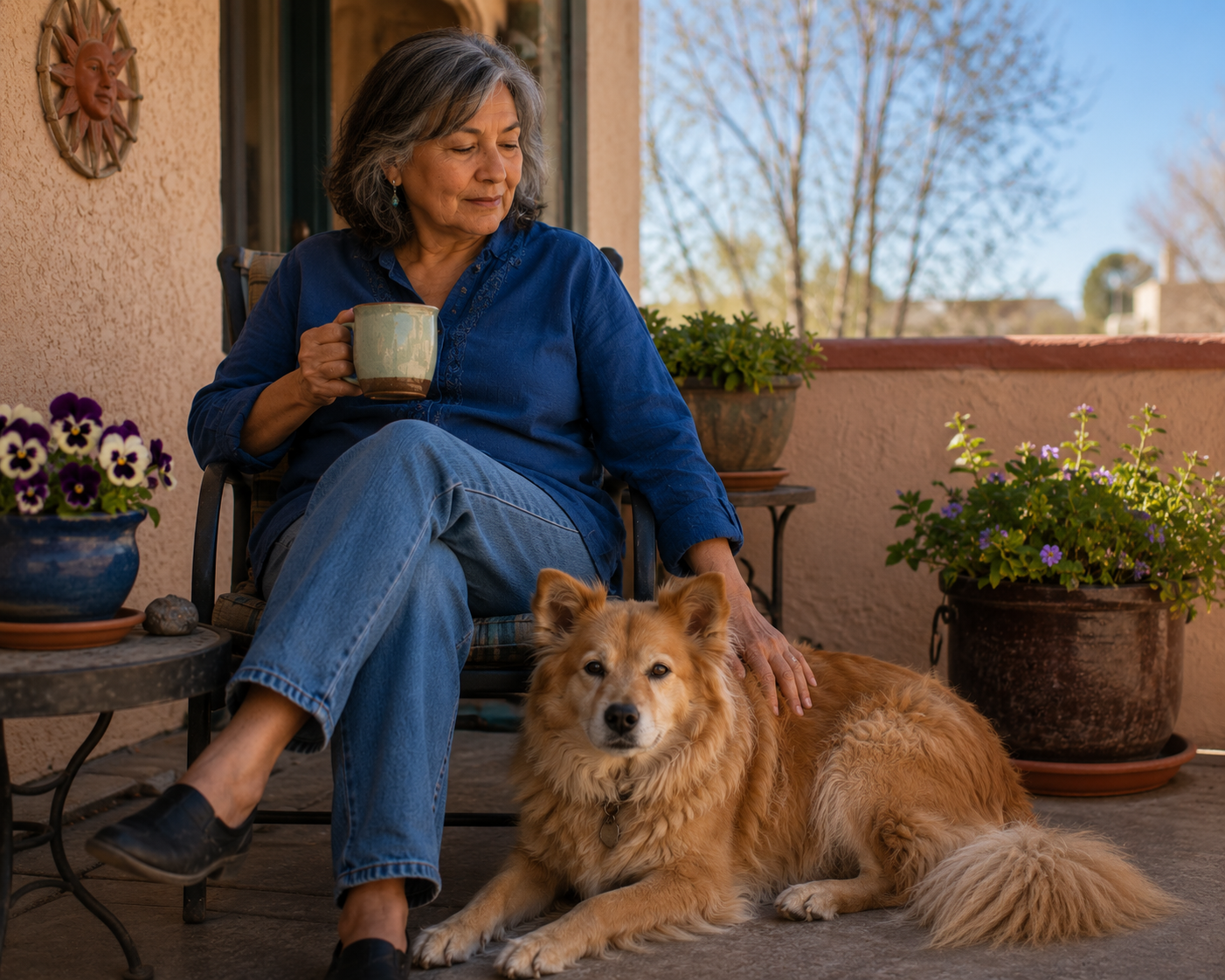
There are times when we don't need anyone to tell us what to do. We may not need advice, reassurance, or any other explanation of why things will eventually get better. Sometimes we don't even have words for what we're feeling.
And yet a dog who quietly lies down beside us, a cat who climbs into our lap, or another animal who simply remains nearby can change the experience of being alone with whatever hurts.
Animal companions don't know how to solve grief, loneliness, anxiety, heartbreak, or the enormous disruptions that sometimes enter our lives. They cannot change a diagnosis, repair a relationship, bring someone back, or make an uncertain future predictable. But they can be present.
Increasingly, research into the human-animal bond is helping us understand why that presence—and the relationship surrounding it—may matter. The research is more complicated than the familiar claim that “pets are good for our mental health.” Not every person benefits from living with an animal, and having a companion animal doesn't automatically protect someone from depression, anxiety, loneliness, or grief. Studies have found positive, negative, and neutral associations between pet attachment and mental health.
Perhaps the more interesting question isn't simply Are pets good for us? It is: What happens within some human-animal relationships that can help support emotional healing?
🐾 Understanding the Human-Animal Bond
The human-animal bond describes the relationship that develops between people and animals and the ways that relationship can affect the wellbeing of both. That last part matters. An animal isn't simply a therapeutic resource that happens to live in our house. The relationship is reciprocal. We provide food, shelter, veterinary care, protection, affection, play, exercise, companionship, and attention to another living being whose needs and preferences matter too.
In return, many of us experience relationships with animals as sources of companionship, affection, routine, connection, meaning, and sometimes extraordinary comfort. Research into human-animal relationships has increasingly moved beyond asking whether pet ownership itself produces a particular health outcome. More recent work has also begun examining the mechanisms within these relationships—the experiences of safety, trust, emotional co-regulation, routine, responsibility, agency, identity, and meaning that might help explain why particular animal relationships become important during difficult periods of human life.
This doesn't mean our animals are secretly practicing psychotherapy on us. It means relationships matter, including relationships that cross species.
💙 Presence Without Explanation
Human relationships can offer profound support when we're hurting. But human relationships also require language. Someone asks how we're doing, and we have to decide whether we want to tell them. We might worry that we've talked about a loss too much already, that our sadness is making other people uncomfortable, or that someone will try to fix something that cannot be fixed. We might hear You have to move forward, Everything happens for a reason, or At least... when what we really need is someone willing to remain with us in the reality of what has happened.
Animals offer a different kind of companionship. The dog beside us doesn't need an explanation for why we're crying again. The cat doesn't require us to make our feelings coherent before settling against our leg. We don't have to make conversation, reassure them that we'll be okay, or find a socially acceptable way to describe what we're experiencing.
Recent qualitative research into companion animals and mental health has highlighted experiences of continuity, non-judgment, trust, and embodied presence as some of the ways people describe the importance of these relationships during periods of psychological distress. Sometimes another living being simply staying nearby is enough to make a difficult moment feel a little less solitary.
🌿 When Our Bodies Settle Together
Connection with animals isn't only emotional. It can also be physical, and we might notice this without having language for it. Perhaps your breathing begins to slow while your hand rests on the familiar rise and fall of your dog's side. A cat's purr becomes part of the quiet in the room. Brushing a horse requires enough attention to rhythm and movement that, for a few minutes, your thoughts stop racing ahead of you.
Researchers studying human-animal interaction have explored physiological and psychological responses associated with touch, proximity, and interaction with animals, including changes related to stress and anxiety. Findings vary depending on the people, animals, circumstances, and type of interaction involved, so it would be too simple to claim that petting an animal automatically regulates the human nervous system. But the idea of co-regulation can still give us useful language for something many people recognize from experience.
We are embodied creatures living alongside other embodied creatures. We respond to warmth, movement, breathing, sound, touch, familiarity, and the sense of safety that can develop within a trusted relationship. You might never consciously think, My nervous system is regulating. You might simply notice that after ten minutes with your hand resting on the dog, you're breathing differently.
🦮 The Healing Power of Having Somewhere to Be
Difficult life transitions can disrupt the rhythms that once organized our days. Grief may leave us wondering what to do with hours previously structured around another person or animal. Retirement can remove routines that shaped decades of life. Illness, divorce, relocation, caregiving, unemployment, trauma, or other major changes can make ordinary days feel unfamiliar.
Animals are remarkably unimpressed by our existential crises. Breakfast remains breakfast. The dog still needs to go outside. The cat knows perfectly well that dinner is late. Water bowls need filling, walks happen, medication needs giving, and someone wants the toy thrown even though we’re currently contemplating the meaning of existence.
That ordinary responsibility can sometimes be grounding. Recent research examining how people describe the role of companion animals during mental-health difficulties has identified routine and responsibility as potential pathways through which animal relationships may support daily functioning and a sense of agency. There is somewhere to be, something to do, and another living being whose day continues alongside ours.
Of course, responsibility can work in the other direction too. When someone is physically ill, financially strained, severely depressed, overwhelmed, or otherwise struggling, caring for an animal can become difficult. Worry about veterinary expenses, housing, behavior, or whether we can continue providing adequate care can add significant stress. The same relationship can contain comfort and responsibility at once. That doesn't make the bond less meaningful; it makes it real.
🌎 Animals Can Connect Us Back to the World
Animals might also gently pull us beyond ourselves. A dog needs a walk, and suddenly we're outside. We notice the weather. Someone across the street says hello. A neighbor asks the dog's name. Another dog walker stops to talk, and eventually we begin recognizing the same people at the park each morning.
Even animals who never leave home can become part of our social worlds. We share photographs and stories. Friends ask about them. Family members develop their own relationships with them. A cat appearing unexpectedly during a video call can produce more conversation than anything on the meeting agenda.
None of this means animals should replace human connection. But companion animals can sometimes act as social bridges, helping create interactions between people who might otherwise pass one another without speaking. The relationship with the animal itself can also provide a sense of companionship and belonging. For someone whose world has become smaller through illness, grief, retirement, relocation, disability, or isolation, those points of connection may matter.
🪶 Who Am I Now?
Emotional healing isn't only about feeling less sad or anxious. Sometimes it involves reconstructing a sense of who we are.
After a major loss or transition, familiar identities can change abruptly. Someone who spent years as a spouse becomes a widow or widower. A caregiver's daily role ends after the person they cared for dies. Retirement changes an identity built partly around work. A move takes us away from the community where people knew our history. We can easily find ourselves asking, Who am I now?
Relationships with animals can provide a small but meaningful thread of continuity. I’m still the person this dog looks for when she's frightened. I’m still the one who knows exactly how this cat likes his food prepared. I’m still the person who takes the slow morning walk because an old dog's legs need time to get going.
Research into human-animal relationships during periods of psychological difficulty has identified identity and meaning-making as another way these relationships might become significant. These roles can look mundane from the outside, but when other parts of life have changed dramatically, being needed, recognized, and known by another living being can remind us that some part of our story continues.
🌧️ Animals Don't Make Everything Better
It’s important not to romanticize the human-animal bond. Research does not show that simply having a pet guarantees better mental health. A recent systematic review examining pet attachment and mental-health outcomes found a complicated picture, with studies reporting positive, negative, mixed, and nonsignificant relationships.
That complexity makes sense. Human-animal relationships differ just as human relationships do. People differ. Animals differ. Living circumstances differ. Companion animals can also bring responsibility, expense, worry, disrupted sleep, housing complications, behavioral challenges, difficult medical decisions, caregiving demands, and eventually, for most of us, grief.
And not everyone wants an animal. Someone who doesn't enjoy living with animals isn't missing an essential ingredient for emotional wellbeing, nor should someone acquire an animal simply because they have heard that pets are good for mental health. Most importantly, companionship from an animal doesn't replace safe housing, adequate income, healthcare, supportive human relationships, community, mental-health treatment, medication when appropriate, or professional help during a crisis.
Animals are not treatments. They are relationships. Perhaps understanding that distinction helps us appreciate what they actually can offer.
🌱 Healing Doesn't Always Mean Fixing
We often speak about emotional healing as though its goal was to restore us to who we were before something painful happened. But some experiences change us. The person who emerges after bereavement isn't exactly the person who existed before the death. Serious illness can change how we understand our bodies and our futures. Divorce, caregiving, trauma, retirement, relocation, and other major transitions can reshape our identities, relationships, priorities, and sense of safety.
Healing might not mean going back. Sometimes it means learning how to live within a life that is now different, and an animal companion might accompany that process without needing us to complete it.
We can still be grieving and take the dog for a walk. We can still be frightened and laugh when the cat does something ridiculous. We can feel lonely and simultaneously experience the warmth of another body sleeping beside us. We can miss the life we had while still caring for the life that is here.
Those experiences don't cancel one another out. Perhaps they remind us that emotional healing isn't necessarily the disappearance of pain. Sometimes healing begins when pain is no longer the only thing we can feel.
🐾 When the Animal Is Part of What We're Losing
There’s another complexity in the human-animal bond that deserves acknowledgment: the animal who has accompanied us through difficult times will eventually age too.
A dog who helped someone survive a divorce may later develop arthritis or cancer. The cat who slept beside someone throughout a period of profound grief may eventually need caregiving herself. An animal associated with an important chapter of our lives can become a living connection to people, places, and versions of ourselves that no longer exist.
When that animal becomes seriously ill or dies, we can be grieving more than the companion alone. We can also be grieving what the relationship represented: You were there when nobody else was. You knew the person I was before everything changed. You helped me get through that.
This can make anticipatory grief and pet loss particularly complicated. The animal who once helped hold us through another loss has now become the one we are preparing to lose. There is nothing excessive about recognizing the depth of that grief. It reflects the depth and history of the relationship.
💛 Relationship as Part of Healing
Perhaps this is one reason animal companions can become so important during difficult seasons of our lives. They don't ask us to finish grieving before we take the walk. They don't need us to understand what happened before they curl up beside us, and they don't require us to become our old selves again. They simply continue the relationship.
Within that relationship there may be touch, routine, responsibility, companionship, laughter, frustration, movement, connection, care, and the experience of being known by another living being.
At Life & Death Services, companion-animal care and support begins with the understanding that the relationship between people and their animals matters. That relationship can become especially important as an animal ages or becomes seriously ill, when caregiving changes the rhythm of daily life, and when families begin facing anticipatory grief or bereavement.
Supporting the human-animal bond means making room for the whole relationship—not only the joy of loving an animal, but also the responsibility, vulnerability, change, and eventual grief that loving another living being brings.
Emotional healing isn't about being fixed. Sometimes it is about discovering that even while something hurts, connection, care, routine, laughter, comfort, and love are still possible.
And sometimes an animal companion helps us discover that simply by remaining beside us.
📚 References & Further Reading
Brooks, H. L., et al. (2026). Qualitative synthesis examining how companion animals may support people experiencing mental-health difficulties, including emotional co-regulation, safety, trust, routine, responsibility, agency, identity, and meaning-making. Frontiers in Psychiatry. Read the article
Systematic review of pet attachment and mental health (2025). Review of 116 studies finding that the relationship between attachment to companion animals and human mental health is complex, with positive, negative, mixed, and nonsignificant findings across the literature. View the study on PubMed
Human-animal interaction and stress (2026). Recent research exploring psychological and physiological responses associated with interaction with companion animals and the potential role of human-animal interaction in stress regulation. Frontiers in Psychology. Read the article