
Grief as a Spiritual Practice: Learning to Hold What Hurts
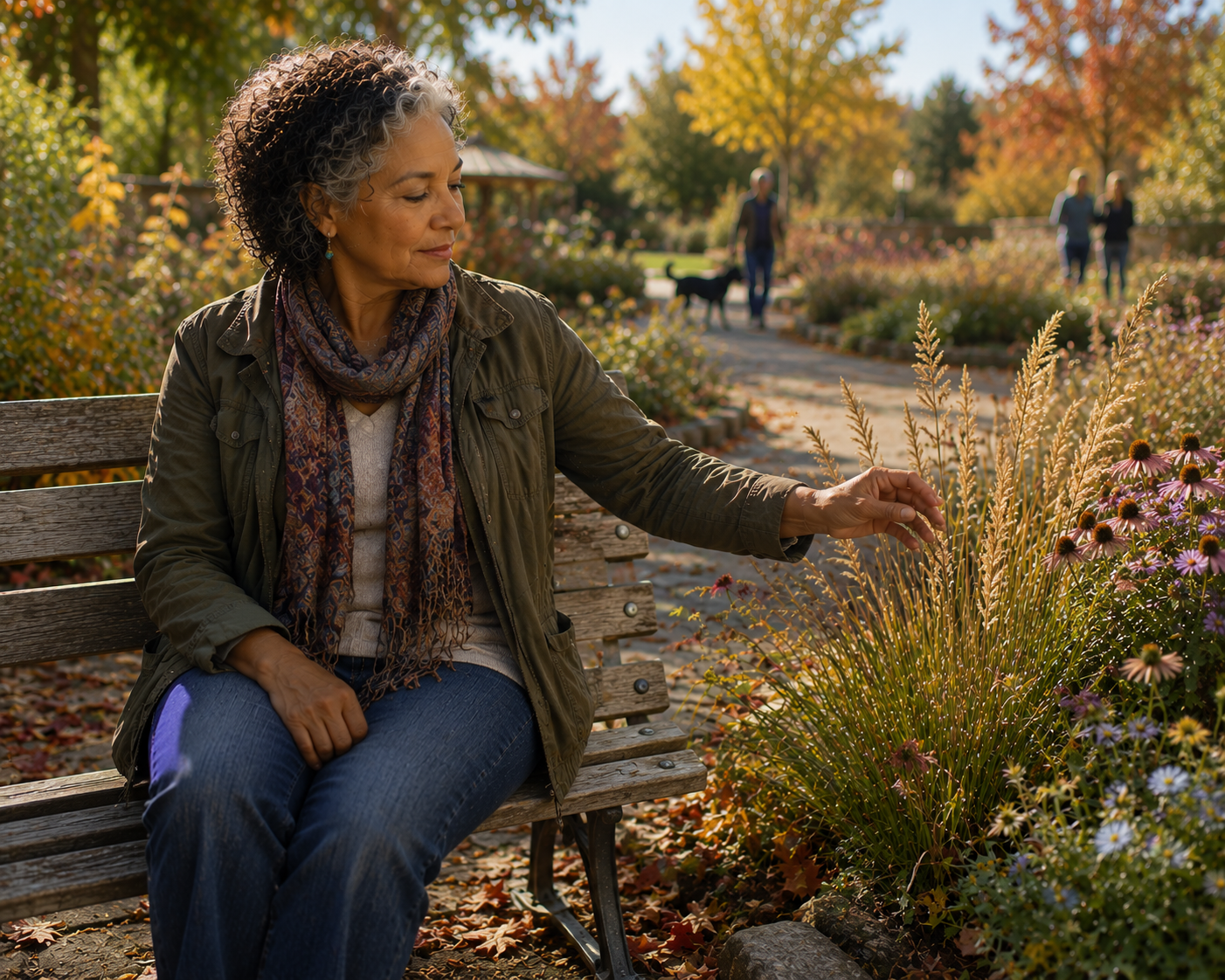
Grief has a way of making contradictions visible. We can miss someone desperately and feel grateful for the life we shared. We can cry in the morning and laugh at something ridiculous that afternoon. We can feel someone's absence everywhere and still experience a sense of connection to them. We can be deeply sad and, unexpectedly, have a good day.
For a long time, popular conversations about grief tended to suggest that healing meant gradually moving away from grief. Even though contemporary grief work offers a much more complex picture, many of us still carry an expectation that we should eventually reach a place where the loss no longer affects us quite so much.
What if healing asks something different of us? What if, rather than learning how to leave grief behind, we gradually develop the capacity to hold what hurts alongside everything else that remains—love, connection, beauty, laughter, meaning, and even joy?
This is one way I think about grief as a spiritual practice.
But that phrase needs an important clarification from the beginning. Calling grief a spiritual practice does not mean that a loss was meant to happen, that suffering is spiritually beneficial, or that grieving people should search for the lesson hidden inside what happened. We don't have to believe that everything happens for a reason. We don't have to become wiser because someone died. We don't even have to find meaning in the loss.
The loss is not the practice. The practice is how we learn to accompany ourselves through a reality we did not choose.
🌿 What Makes Grief a Spiritual Practice?
Spirituality doesn't necessarily mean religion. For some people, spirituality is inseparable from faith, God, prayer, or religious community. For others, it is found in nature, relationships, creativity, ancestry, service, meditation, ritual, or a sense of connection to something larger than themselves.
At its broadest, spiritual life often involves the questions beneath the practical business of living: What gives my life meaning? What do I love? Where do I belong? What connects me to other people and the world around me? What do I believe about suffering, mortality, and death?
Loss has an unsettling way of bringing those questions to the surface.
Where are you now? Who am I without you? What happens after death? Why did this happen? What do I believe now that something I prayed wouldn't happen has happened? How can someone be gone and still feel so present? What do I do with all this love when the person—or animal—I love is no longer physically here?
Spiritual practice doesn't necessarily answer those questions. Sometimes the practice is learning to live honestly in their presence.
💙 Learning to Hold More Than One Truth
Contemporary grief research gives us a useful alternative to the idea that healthy grieving should follow a steady progression away from loss.
Margaret Stroebe and Henk Schut's Dual Process Model of Coping with Bereavement describes grieving as movement between two kinds of experiences. At times, we turn toward the loss itself: remembering, longing, crying, thinking about the death, or feeling the absence of the person who died. At other times, we turn toward the life that continues: attending to responsibilities, adapting to changed roles, developing new routines, connecting with other people, solving practical problems, or simply taking a break from grieving.
We don't complete one and graduate to the other. We move between them. That movement helps explain something grieving people sometimes find confusing: having a good day doesn't mean grief is over.
You can miss her terribly and have a wonderful afternoon. You can wish he were here and feel grateful for the years you had. You can dread the anniversary and want to celebrate his birthday.
You can be grieving and be happy. The word and matters.
Grief asks us to live with realities that can initially feel impossible to hold together. Over time, our capacity may expand. The loss hasn't become less real, and the love hasn't become less important. There’s simply more room around them.
🕯️ Making Room for Lament
There is another reason I find the language of spiritual practice helpful: many spiritual traditions have understood something our culture sometimes forgets: Sorrow needs somewhere to go.
Lament appears in religious traditions around the world in different forms—through prayer, poetry, music, mourning rituals, storytelling, communal gathering, silence, and even protest. Lament doesn't require us to make suffering beautiful. It gives us permission to tell the truth that something hurts.
For someone within a religious tradition, that truth might include anger at God, unanswered prayer, doubt, or the feeling that beliefs that once offered comfort no longer make sense. Grief can change a person's relationship with faith as easily as it can deepen it.
For someone who isn't religious, lament can still be a meaningful practice. Writing what we wish we could say, sitting somewhere that mattered to the person who died, crying without apologizing for it, making art, walking, listening to music, or simply saying I hate that this happened can all create space for honest sorrow.
A spiritual practice doesn't always have to make us peaceful. Sometimes it helps us tell the truth.
🌱 Love Doesn't End Where Life Ends
Older ideas about grief sometimes assumed that healthy mourning required gradually withdrawing emotional energy from the person who died. Contemporary grief theory has complicated that assumption through the concept of continuing bonds—the recognition that people often maintain an ongoing inner or symbolic relationship with someone who has died.
We might tell stories about them. Cook their recipes. Keep photographs nearby. Wear a piece of their jewelry. Visit a meaningful place. Celebrate a birthday. Talk to them while driving. Continue something they taught us. Notice ourselves using one of their expressions and laugh because somehow, after all these years, we've become them.
The same can be true after the death of an animal companion. A collar may remain hanging by the door. Their photograph stays on the shelf. We still think of them when we walk a familiar route or find ourselves remembering exactly where their bed used to be.
None of this requires a particular belief about what happens after death. One person may understand an ongoing connection religiously, another spiritually, another psychologically, and another through family or cultural tradition.
What matters is that death changes a relationship, but it doesn’t erase the relationship's place in our lives. Learning how to carry that connection forward can itself become part of the practice of grief.
☀️ When Joy Comes Back
One of grief's stranger experiences can be the return of joy. The first genuine laugh after someone dies might surprise us. We might suddenly realize we enjoyed dinner with a friend. We become absorbed in a book. Something beautiful catches our attention. We make plans and discover we're looking forward to them.
And then guilt arrives.
How can I be happy when they're dead?
Am I moving on too quickly?
Does this mean I'm forgetting?
But joy doesn't use up the love we have for someone who died. Enjoying the life that remains doesn't rewrite the life we shared with them.
The Dual Process Model is helpful here, too. Turning our attention toward ongoing life—and even experiencing respite from grief—isn't necessarily avoidance or evidence that the relationship mattered less. Movement between attending to grief and attending to life can be part of adapting to bereavement.
There’s no requirement to find joy, especially on someone else's timetable. But when joy does arrive, perhaps part of the spiritual practice is allowing it to sit down beside grief rather than making one of them leave the room.
🌊 Some Days Grief Takes Up More Space
Holding grief and joy together doesn't mean achieving some beautiful emotional equilibrium. There will be days when the loss takes up nearly all the room.
A birthday, anniversary, holiday, familiar song, medical appointment, smell, photograph, or completely ordinary Tuesday can suddenly bring grief close again. Years may have passed, and the intensity can still surprise us.
That doesn't necessarily mean we're moving backward. Grief isn't a test we pass by becoming increasingly unaffected by what happened. The continuing importance of a person who died isn't measured by how rarely we miss them.
Other days, grief may sit more quietly in the background while work, friendship, errands, laughter, creativity, travel, caregiving, or ordinary life moves to the foreground.
The practice isn't controlling how much space grief occupies. It is learning that all of those days can belong to the same life.
🤝 When We Need Other People to Help Us Hold It
Grief is a natural response to loss, and grieving does not automatically mean someone needs professional treatment. Many people find meaningful support through friends and family, faith or spiritual communities, personal practices, rituals, and the passage of time.
But we aren't required to carry grief alone.
A grief support group may be helpful when what we most need is connection with people who understand something about the territory we're walking through. There can be enormous relief in entering a space where we don't have to explain why we're still grieving, why a particular kind of loss has been devastating, or why everyone else's lives seem to have resumed while ours still feels profoundly changed.
Groups can be particularly valuable when grief feels isolating or disenfranchised—when other people don't fully recognize the loss. Pet loss, estrangement, miscarriage, the death of an ex-partner, stigmatized deaths, complicated family relationships, and other experiences can sometimes leave people feeling as though they have to defend their right to grieve.
Research on bereavement groups is nuanced; not every grieving person needs a group, and group participation doesn't uniformly reduce grief symptoms. But the opportunity for recognition, shared experience, and social connection can itself be valuable, and structured interventions may be particularly useful for some people experiencing more persistent grief difficulties.
A grief counselor or therapist may be helpful when grief feels persistently overwhelming, significantly interferes with everyday functioning, traumatic circumstances surrounding the death remain difficult to process, depression or anxiety is intertwined with the loss, or other mental-health concerns are present. Research reviews support psychotherapy as an effective intervention for people experiencing significant grief-related difficulties.
There is also no requirement to wait until things become unbearable. Wanting individualized support is reason enough to seek it.
Some people experience a persistent and disabling grief response known as Prolonged Grief Disorder. Importantly, this diagnosis isn't simply about grieving for a long time. Clinical assessment considers the intensity and persistence of symptoms, their impact on functioning, the time since the death, and what is expected within a person's social, cultural, and religious context. Deeply loving and missing someone years after their death is not, by itself, a mental disorder.
🪷 Where Spiritual Direction and Reiki May Fit
Grief counseling and spiritual direction can overlap in the territory they encounter, but they serve different purposes.
A grief counselor or psychotherapist is trained to address psychological distress, mental-health concerns, trauma, coping, and clinical grief needs.
Spiritual direction offers a different kind of companionship. It can provide space to explore questions of meaning, faith, identity, mortality, anger, doubt, connection, ritual, or relationship with the sacred that may emerge after a loss. A spiritual director doesn't need to provide an explanation for why the loss happened. In fact, one of the gifts of spiritual direction can be having somewhere to bring questions that may never have definitive answers.
Some people may find both helpful.
Reiki can serve yet another role. It’s not a treatment for grief and shouldn't be presented as one. But for people who find Reiki meaningful, a session can offer quiet, intentional time for rest, reflection, or relaxation when conversation feels exhausting. Sometimes grief is so embodied that having a practice that doesn't require us to explain what we're feeling can be welcome.
There is no single correct way to create support around grief. The question is not Which one am I supposed to need? but rather What kind of companionship would be helpful to me right now?
💛 A Life Spacious Enough for Both
Grief asks us to hold what hurts because what hurts is connected to what mattered. Over time, we might discover that we can hold more than we thought possible: absence and connection, sorrow and gratitude, anger and tenderness, memory and change, grief and laughter.
The goal isn't to balance them perfectly. Some days grief will take up nearly all the room. Other days joy may arrive unexpectedly and stay awhile.
Perhaps the spiritual practice is learning that we don't have to choose between them.
At Life & Death Services, spiritual direction offers a compassionate space for exploring the questions of meaning, connection, belief, doubt, mortality, and identity that can arise through grief. Reiki may offer another form of quiet support for those who find the practice meaningful. Neither asks grief to disappear, and neither replaces mental-health care when that is what someone needs.
Grief isn’t a spiritual gift we were supposed to receive. Loss doesn't need to have happened for a reason. But when loss becomes part of our life, we can learn to accompany ourselves through it with honesty, tenderness, and support.
We can miss what was and love what is. We can carry sorrow and still experience beauty. We can grieve deeply and still be fully alive.
Perhaps learning to hold what hurts isn't about clutching pain forever. Perhaps it is about slowly creating a life spacious enough for grief to live alongside everything else that remains.
📚 References & Further Reading
Stroebe, M., & Schut, H. (1999). The Dual Process Model of Coping with Bereavement: Rationale and Description.Death Studies, 23(3), 197–224. The model describes bereavement as an oscillation between loss-oriented and restoration-oriented coping rather than a linear through grief. View the article on PubMed
American Psychological Association. Continuing bond. APA Dictionary of Psychology. A concise introduction to the concept of maintaining an emotional or symbolic relationship with someone who has died. APA Dictionary of Psychology
American Psychiatric Association. Prolonged Grief Disorder. Background on the distinction between normal bereavement and persistent grief that causes clinically significant distress or impairment. Learn about Prolonged Grief Disorder
Systematic review of interventions for bereaved adults (2026). Recent review of evidence for interventions following bereavement, including individual psychotherapy and grief-related outcomes. View the review on PubMed