
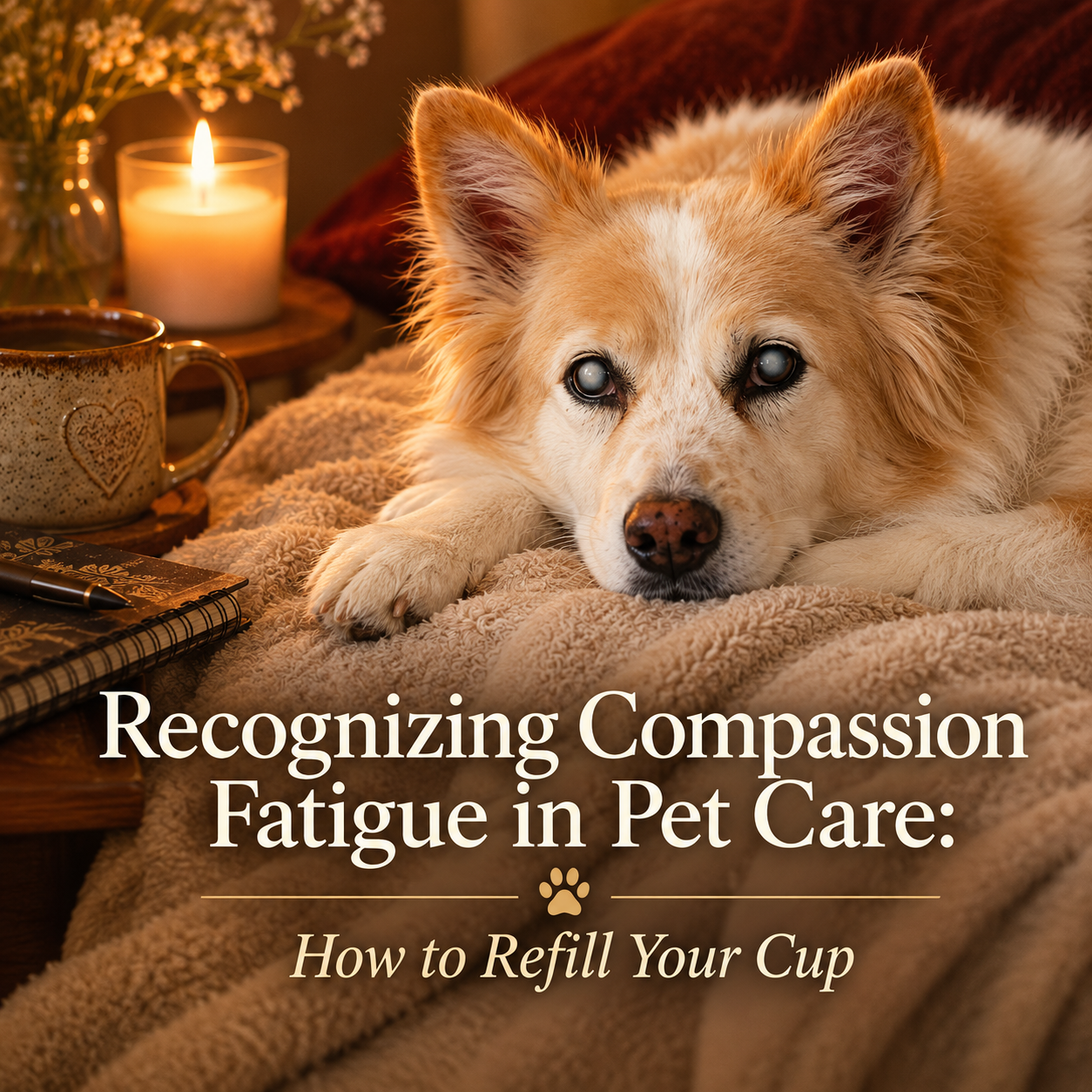
There is a particular kind of exhaustion that can come from loving and caring for animals.
It can happen slowly over time.
One emergency appointment after another.
One senior pet who needs increasing care.
One difficult goodbye.
One frightened rescue dog.
One chronically ill cat.
One sleepless night listening for changes in breathing.
Eventually, even the most devoted animal lovers can begin to feel emotionally depleted.
This experience is often called compassion fatigue.
Compassion fatigue is sometimes described as the emotional, mental, and physical exhaustion that can happen when we spend long periods caring for others who are suffering or dependent on us. While the term is often used in healthcare, veterinary medicine, hospice, and social work, it can affect anyone deeply involved in caregiving, including pet parents, rescue workers, foster caregivers, veterinary staff, and those caring for aging or terminally ill animals.
And perhaps the hardest part? Many caring people do not recognize it in themselves until they are already overwhelmed.
🐾 Common Signs of Compassion Fatigue
Compassion fatigue can and will look different for different people, but some common signs include:
Feeling emotionally numb, detached, or exhausted
Increased irritability, sadness, anxiety, or hopelessness
Difficulty sleeping or constantly feeling tired
Feeling guilty for needing a break
Losing interest in activities that normally bring joy
Feeling overwhelmed by even small caregiving tasks
Becoming emotionally reactive or easily frustrated
Feeling isolated or misunderstood
Constantly worrying about your pet’s condition
Struggling to be fully present because your nervous system never feels settled
Sometimes people describe it as feeling like they are “running on empty.” Others say they feel emotionally stretched so thin that even small setbacks feel enormous.
And for many caregivers, there is a painful internal conflict:
You love your animals deeply.
You want to care for them.
But you are also tired.
Both things can be true at the same time.
🌿 Why Animal Care Can Be Emotionally Intense
Animal caregiving often involves a unique emotional bond. Animals depend on us completely for safety, comfort, medical care, and advocacy. Many caregivers also carry an intense sense of responsibility, especially when caring for senior pets, disabled animals, hospice animals, or pets with chronic illness.
And unlike many human relationships, animals cannot verbally tell us what they need.
That uncertainty can create constant emotional vigilance:
Are they hurting?
Did I miss something?
Am I doing enough?
Over time, living in that heightened state of emotional alertness can deeply affect the nervous system.
And because society does not always recognize pet caregiving as “real caregiving,” many people suffer quietly without enough support.
☕ How to Begin Refilling Your Cup
There is no perfect formula for preventing compassion fatigue. But there are ways to care for yourself while continuing to care for the animals you love.
Create Gentle Boundaries
Boundaries are not about loving less. They are about creating enough emotional and physical sustainability to continue showing up with care.
This might include:
Allowing yourself regular breaks
Sharing caregiving responsibilities when possible
Saying no to additional commitments
Limiting how much upsetting animal content you consume online
Giving yourself permission to rest without guilt
Boundaries help protect your nervous system from remaining in a constant state of emotional overload.
Find Joyful Distractions and Moments of Rest
When people are overwhelmed, they sometimes stop allowing themselves joy. But small moments of pleasure and rest matter.
You are still allowed to:
Laugh
Watch comforting movies
Read novels
Spend time in nature
Listen to music
Enjoy hobbies
Meet a friend for coffee
Take a walk without feeling guilty
Soak in the tub
Joy is not a betrayal of your caregiving. In many ways, it is part of what helps sustain it.
Build a Support System
Compassion fatigue grows heavier in isolation.
Many caregivers benefit from having spaces where they can speak honestly about exhaustion, anticipatory grief, fear, sadness, frustration, or uncertainty without feeling judged.
Support can come from many places:
Friends and family
Pet loss or caregiver support groups
Mutual aid circles
Online communities
Faith or spiritual communities
Veterinary support programs
Sometimes simply hearing “you are not alone in this” can ease part of the emotional burden.
Seek Professional Support When Needed
Sometimes compassion fatigue becomes too heavy to carry alone.
Professional support does not always have to mean traditional therapy, although licensed therapists can absolutely help.
Support might also include:
Spiritual direction
Chaplaincy support
Life coaching
Grief support groups
Caregiver circles
End-of-life doulas
Peer support communities
The important thing is finding support that feels safe, compassionate, and aligned with your values and needs.
🌼 A Helpful Self-Assessment Tool
The American Veterinary Medical Association (AVMA) offers a free wellbeing self-assessment tool originally designed for veterinary professionals, but many animal caregivers may also find it helpful as a starting point for reflection:
AVMA Wellbeing Assessment Tool (it’s free!): https://www.avma.org/my-veterinary-life/veterinary-wellbeing-assessment
Sometimes putting words to what we are experiencing can help us recognize when we need more support.
🕯️ You Matter Too
People who care deeply for animals often become very skilled at noticing the needs of others while overlooking their own. But caregivers are living beings too.
You deserve rest.
You deserve support.
You deserve moments of peace and joy.
And caring for yourself is not separate from caring for the animals you love. It is part of creating a sustainable, compassionate life for both of you.
At Life & Death Services ~ Companion Animal Care & Support offers gentle, non-medical support for pet caregivers navigating grief, anticipatory grief, caregiving stress, aging pets, and end-of-life journeys. Services include pet loss grief support, companion animal end-of-life doula support, caregiver support, and distance Reiki for animals and their humans.