
Navigating Guilt After Pet Loss: Finding Grace in Your Grieving Heart
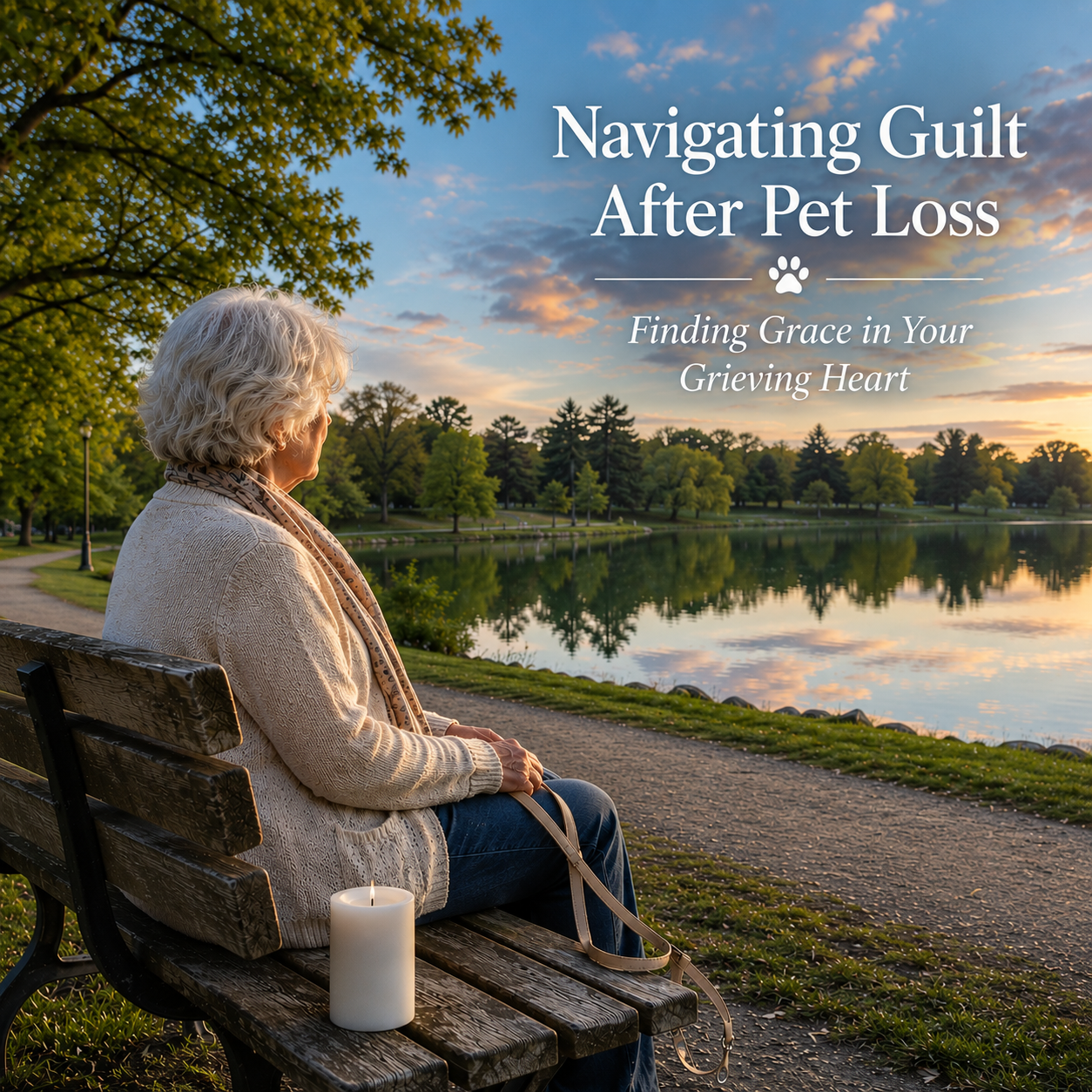
One of the quietest heartbreaks after losing a beloved pet isn't always the grief itself.
It's the questions:
Did I wait too long?
Did I let them go too soon?
Should I have noticed the symptoms earlier?
What if I had tried one more treatment?
What if I had chosen differently?
If you've found yourself replaying these questions after saying goodbye to a cherished companion, you're far from alone. In my work supporting people through companion animal end-of-life and grief, I can tell you that guilt is one of the most common emotions people bring into the conversation. It often arrives quietly, settling beside grief until it begins to feel as though the two can no longer be separated.
The difficult truth is that guilt is rarely a sign that you failed your pet. More often, it is evidence of how deeply you loved them.
💙 Why Guilt So Often Walks Beside Grief
When we welcome an animal into our lives, we accept a unique kind of responsibility. Our pets depend on us for almost everything. We choose their food, schedule their veterinary appointments, notice changes in their behavior, and make decisions intended to keep them safe, healthy, and comfortable.
Over time, responsibility and love become intertwined.
When they’re healthy, that responsibility often feels like a privilege. We delight in caring for them, learning their routines, celebrating their quirks, and becoming fluent in the language of their wagging tails, soft purrs, eager greetings, and quiet companionship.
But when illness enters the picture, something changes.
The same responsibility that once felt joyful can begin to feel impossibly heavy.
Every decision suddenly seems enormous.
Every symptom feels significant.
Every choice carries the weight of wondering whether it is the "right" one.
Unlike most human relationships, companion animals often place us in the heartbreaking position of making decisions about the end of life. Whether euthanasia becomes part of your pet's story or nature takes its course, many loving guardians are left wondering if they somehow got it wrong.
Was it too soon?
Too late?
Should I have done more?
These questions arise not because you lacked love, but because you carried so much of it.
🌿 When Love Meets Helplessness
Human beings are uncomfortable with helplessness. When something heartbreaking happens, our minds instinctively begin searching for explanations. We replay conversations, appointments, and decisions, hoping to find the moment where the story could have changed. If only we had noticed sooner. If only we had asked one more question. If only we had chosen differently.
Those thoughts feel productive because they give us something to do. In reality, they often become grief's attempt to bargain with a past that cannot be rewritten.
Psychologically, this can create the comforting illusion that we were in control. But love has limits and even the most devoted guardian cannot stop aging. Cannot erase cancer. Cannot cure every disease. Cannot guarantee one more tomorrow.
Love gives us many beautiful gifts, but it does not grant us the power to prevent death.
That reality is painful to accept, and sometimes guilt feels easier to carry than helplessness.
🕯️ When Guilt Becomes the Whole Story
One of guilt's greatest tricks is that it edits our memories. Instead of remembering years of companionship, it shines a spotlight on the final days.
The emergency appointment.
The difficult diagnosis.
The sleepless nights.
The last car ride.
The final breath.
Without realizing it, we begin measuring an entire relationship by one heartbreaking chapter. But that chapter was never the whole story.
Your pet's life was not defined by a single decision. It was made up of thousands of ordinary moments that, together, became extraordinary.
Morning walks.
Favorite treats.
Games of fetch.
Afternoon naps.
Quiet evenings together.
The familiar sound of your voice.
The comfort of knowing they belonged.
Those moments matter just as much as the ending. Perhaps even more.
🌸 Making Room for Grace
Healing from guilt doesn't usually happen because someone convinces us that our feelings are irrational. It begins when we slowly make room for grace.
Grace doesn't erase sorrow. It doesn't pretend nothing happened. It doesn't ask us to stop missing the ones we love. Instead, grace gently reminds us that we can hold both grief and compassion for ourselves at the same time.
One helpful place to begin is by remembering your pet's entire life, not just the final chapter.
Take a few moments to write down your favorite memories. Remember the silly habits that always made you laugh, the adventures you shared, the ordinary routines that quietly became sacred. Let your mind return to the thousands of ways you showed love over the years, not only the decisions you made during the final days.
It can also help to separate your intentions from the outcome. Every decision you made was based on the information, resources, emotions, and love you had in that moment. Hindsight always gives us knowledge we simply didn't possess at the time. Looking backward with today's understanding often creates an impossible standard that no one could have met while living through those circumstances.
Another gentle practice is to notice how you speak to yourself. If someone you loved shared this same story with you, would you tell them they failed their dog? Would you tell them they should have known everything? Would you insist they carry guilt forever?
Most of us would respond with compassion. Yet we often deny ourselves that same kindness.
Perhaps it’s time to offer yourself the grace you would so freely extend to someone else.
💌 A Letter Your Pet Would Understand
One practice I often recommend is writing a letter to your pet.
Tell them everything that remains in your heart.
Tell them what you're grateful for.
Tell them what you're sorry for.
Tell them what you miss.
Then, after you've finished, take a deep breath and imagine their response. Not what your guilt would say. What they would say.
If our companions could speak, I doubt they would remember whether dinner was five minutes late, whether we chose one veterinarian over another, or whether we hesitated during an impossible decision.
They would remember something much simpler.
That they were loved.
That they belonged.
That someone came home to them.
That someone held them when they were frightened.
That someone stayed.
Animals have an extraordinary ability to live in the present. They don't spend their lives keeping score. They don't measure relationships by perfection. They simply know who loved them.
🕯️ Rituals That Help Us Let Go
Because grief lives not only in the mind but also in the body, rituals can offer a gentle way to acknowledge both love and loss.
You might light a white candle on significant anniversaries.
Plant a tree or flowering shrub in your companion's memory.
Create a photo album or memory box.
Donate food or supplies to an animal shelter in their honor.
Take one last walk along their favorite trail.
These rituals don't erase grief. Instead, they give love somewhere to go. They remind us that relationships continue to shape us long after physical presence has ended.
💛 Grace Is Love Without Self-Punishment
Imagine, just for a moment, that your beloved companion could sit beside you now. Would they ask why you missed one symptom? Would they replay every difficult decision? Would they wish for you to spend the rest of your life punishing yourself?
Or would they simply lean against you the way they always did?
Our animals spent their lives accepting us exactly as we were. Perhaps the greatest way we honor them is by learning to extend that same grace to ourselves.
Your grief is real.
Your questions are understandable.
Your guilt is human.
But none of those things erase a lifetime of love. And love—not perfection—is what your companion carried with them every single day of their life.
🕯️ Finding Grace Together
Pet loss grief is often misunderstood by those who haven't experienced the profound bond we share with our animal companions. When guilt becomes part of that grief, it can feel even more isolating.
At Life & Death Services, I offer compassionate support for people navigating companion animal illness, end-of-life decisions, and the grief that follows. Whether you're wrestling with questions about the choices you made, longing for a safe place to tell your story, or simply looking for someone who understands the depth of your loss, you don't have to carry that burden alone.
Sometimes healing doesn't begin with finding the "right" answers. Sometimes it begins by discovering that grace has been waiting for you all along.