
Soul Fatigue: When Compassion Feels Heavy
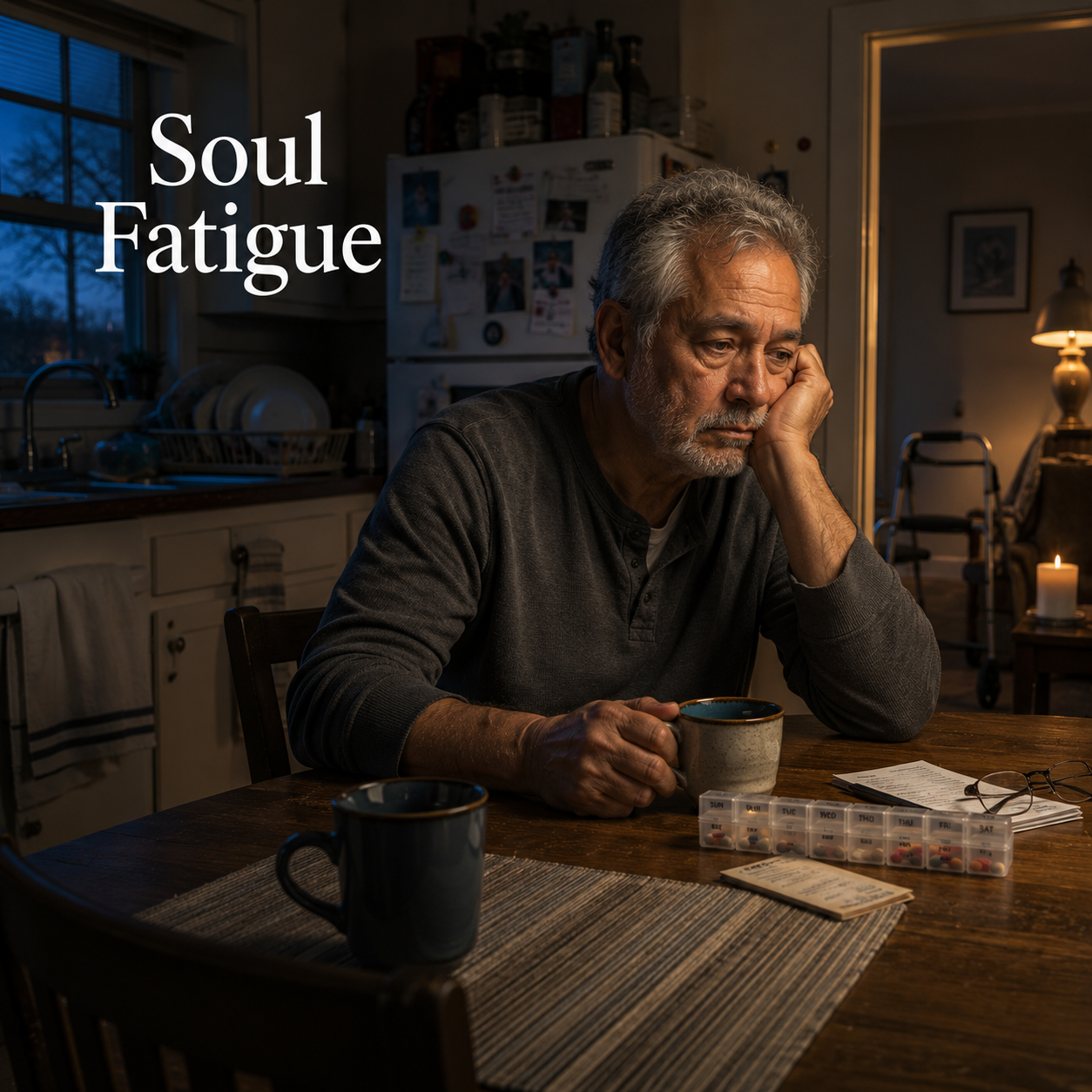
There is a kind of tiredness that sleep doesn't fix.
You might know it if you've spent a long season caring for someone, walking beside grief, worrying about people you love, witnessing suffering, or simply being the person others turn to when life becomes difficult. You might still be functioning. You might still be showing up. You might even still be offering kindness and compassion to the people around you.
But somewhere beneath all of that, something feels weary.
I think of this as soul fatigue.
Soul fatigue isn't a clinical diagnosis, and it doesn't necessarily mean something is wrong. Sometimes it's simply what happens when we've spent too long giving from the deepest parts of ourselves without having enough opportunities to receive, restore, or simply be.
It can happen to caregivers. Helping professionals. Parents. Teachers. People accompanying someone through illness or dying. People who have experienced one loss after another. People deeply affected by what's happening in their communities or in the wider world.
And sometimes it happens to the people who seem especially good at carrying things.
💙 When Caring Becomes Heavy
Compassion is usually described as something beautiful, and it is. Our ability to recognize another being's suffering and respond with care is one of the ways we create connection with one another.
But compassion also asks something of us.
When someone we love is suffering, part of us suffers with them. When we listen to someone's grief, we allow ourselves to enter, however briefly, into their sorrow. When we care for someone who is ill, frightened, dying, overwhelmed, or struggling, we repeatedly open ourselves to experiences we cannot necessarily fix.
Over time, even compassion freely and lovingly given can begin to feel heavy.
That doesn't mean we've stopped loving. It doesn't mean we've become selfish or uncaring. It can simply mean that something within us is asking to be cared for, too.
For people who think of themselves as helpers, that realization can be surprisingly difficult. We might be comfortable offering support while feeling deeply uncomfortable receiving it. We might recognize exhaustion in everyone except ourselves. We might encourage other people to rest, set boundaries, ask for help, or step away while quietly believing that somehow we should be able to keep going.
Eventually, however, the soul has its own ways of asking us to pay attention.
🌿 What Soul Fatigue Can Feel Like
Soul fatigue doesn't always announce itself dramatically. More often, it slips quietly into ordinary life.
You might notice that your patience has become thinner or that small requests suddenly feel enormous. You can begin withdrawing from people you normally enjoy or discover that activities that once restored you now feel like more things you have to do. You might find yourself going through the motions of caring while feeling strangely disconnected from the compassion that once came naturally.
Sometimes it sounds like: I just don't have anything left to give. Please, nobody need anything from me today. I know I should care about this, but right now I can't. I want everyone to leave me alone.
Those thoughts can be frightening, particularly for someone whose identity is deeply connected to being compassionate, helpful, dependable, or spiritually grounded.
But perhaps they aren't evidence that compassion has disappeared.
Perhaps they are messages.
Perhaps something within you is saying, I need some of the care I have been giving everyone else.
🕯️ The Weight of Witnessing
Not all compassion involves doing. Sometimes the hardest thing we do is witness.
We sit beside the hospital bed when there's nothing left to fix. We listen while someone tells a story that has no resolution. We watch someone we love struggle with something we cannot change. We accompany a person or an animal toward the end of life knowing that our presence cannot stop what's coming.
We may also carry suffering that doesn't belong to anyone we personally know. News of war, violence, injustice, disaster, cruelty, or loss can enter our homes every day through screens we carry in our pockets. Caring deeply about the world is a beautiful thing, but being continuously exposed to its suffering can leave very little room for the spirit to recover.
There's a difference between turning away because we don't care and stepping away because we do.
Sometimes compassion needs boundaries in order to survive. We're allowed to turn off the news. We're allowed to silence the phone. We're allowed to say, I can't hold this today. We're allowed to care about suffering without witnessing every moment of it.
Our compassion doesn't become more authentic because we exhaust ourselves proving we possess it.
🌸 When Rest Isn't Quite Enough
Physical exhaustion usually asks for physical rest. A good night's sleep, an afternoon nap, or a quiet weekend can help us feel more like ourselves again.
Soul fatigue can be different.
Sometimes we sleep and still wake up weary. That's because what needs replenishing might not be the body alone.
The soul might need silence after too much noise. It might need beauty after witnessing suffering. It might need laughter after a long season of seriousness. It might need solitude after constantly being available to others, or companionship after carrying something alone for too long.
There isn't one correct prescription.
For one person, restoration might mean sitting beneath a tree without doing anything at all. For another, it might be music, prayer, gardening, painting, walking, cooking, dancing, journaling, or spending time with an animal. Someone else might need to sit across from a trusted person and finally say the words they've been carrying silently: I'm tired.
What restores us doesn't have to be productive. It doesn't even have to be meaningful.
Sometimes the soul simply needs an hour in which nobody needs anything from us.
✨ Creating Space to Receive
Many spiritual traditions contain practices built around receiving rather than doing: silence, Sabbath, meditation, prayer, retreat, ritual, contemplation, time in nature. At their heart is a deceptively simple idea... We are not meant to spend every moment producing, solving, helping, responding, or giving.
We also need spaces in which we can receive.
This is one of the things I appreciate about Reiki. A Reiki session doesn't require us to explain everything that has happened, figure out what comes next, or accomplish something while we're there. Whether receiving Reiki from another practitioner or engaging in a personal Reiki practice, the invitation is simply to become still, notice, breathe, and allow ourselves to receive care.
Spiritual direction can create a different kind of receiving space. Instead of arriving with a problem that needs to be solved, we can bring our weariness, uncertainty, anger, grief, or even our numbness into a conversation and listen for what may be moving beneath it. Sometimes the most important spiritual question isn't What should I do next?
Sometimes it's What does my soul need right now?
The answer may not come immediately. Making room for the question is itself a beginning.
🌿 Compassion Includes You
Perhaps one of the hardest lessons for compassionate people is recognizing that we belong within the circle of our own compassion.
We often imagine compassion moving outward. We notice suffering, and we respond. Someone needs us, and we show up. But compassion that can only travel in one direction eventually becomes difficult to sustain.
There are seasons for giving, and there are seasons for receiving. There are times when we have the capacity to sit beside someone else's pain, and there are times when we need someone to sit beside ours. There are days when we can carry something for another person, and days when we need to put down what we've been carrying.
None of this makes us less compassionate. It makes us human.
You don't have to wait until you're completely depleted before resting. You don't have to justify a boundary by reaching the point of collapse. You don't have to earn an afternoon of quiet by first doing everything everyone else needs.
And you don't have to feel guilty because compassion feels heavy today. Perhaps the heaviness is simply asking you to set something down.
🕯️ When Your Soul Needs Somewhere to Rest
At Life & Death Services, spiritual direction and Reiki offer gentle spaces for people moving through seasons of caregiving, grief, transition, uncertainty, or simply the weariness that comes from carrying too much for too long.
Neither practice is about fixing you or asking you to become better at enduring what's exhausting you. Instead, they can create room to become quiet enough to notice what you need, reconnect with the parts of yourself that may have been pushed aside, and experience what it feels like to receive rather than continually give.
You are allowed to care deeply about others.
You are allowed to care deeply about the world.
And you are also allowed to become tired.
Compassion was never meant to require the abandonment of yourself. Sometimes tending to the soul begins with something much simpler: recognizing that the person who needs your compassion today may be you.