
Common Cultural Misunderstandings (and How to Navigate Them with Grace)
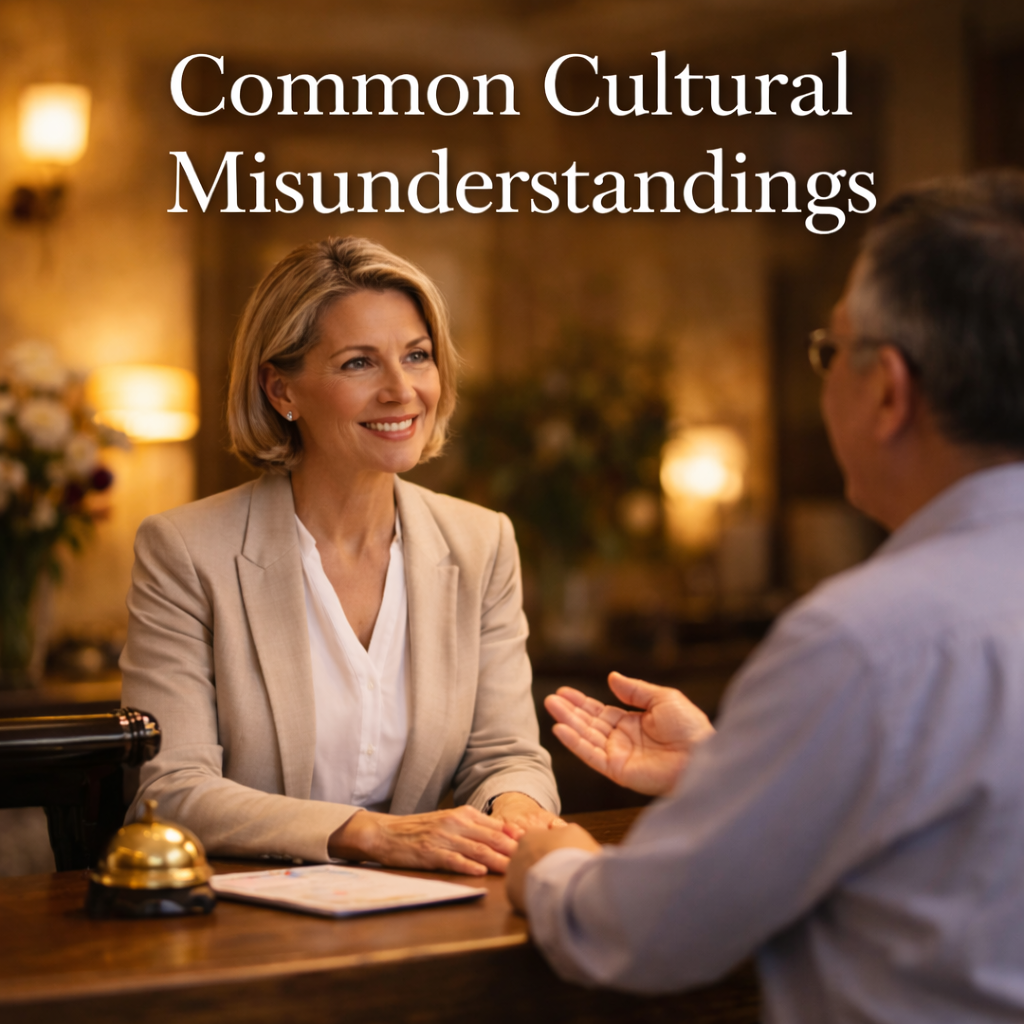
Cultural misunderstandings are not signs of incompetence. They are signs of human difference. It is normal and an opportunity for growth.
When professionals serve U.S. expats in healthcare, veterinary care, or hospitality settings, communication carries more than information. It carries expectation, emotion, habit, and history. Most misunderstandings do not happen because someone is careless or unskilled. They happen because what feels “normal” in one culture can feel confusing, or even personal, in another.
Before going further, it’s important to say this clearly: cultural fluency develops over time. It is layered, complex, and shaped by experience. Even seasoned professionals navigate moments when something feels slightly off. Growth in this area is gradual, not immediate.
What matters most is not perfection. It is how you respond.
🌿 What Is a Cultural Misunderstanding?
A cultural misunderstanding occurs when intention and interpretation are shaped by different expectations about communication, authority, emotion, or service.
Often, these expectations are invisible. They feel like common sense, until they are not.
In a medical appointment, a U.S. expat patient may interrupt frequently with detailed questions. In some cultures, this might feel disruptive or disrespectful to the doctor. In many American contexts, however, frequent questioning signals engagement and self-advocacy.
In a hotel setting, a guest may speak with firm directness when raising a concern. To some, this tone may feel abrupt or like an attack. To the guest, it may feel efficient, honest, and transparent.
These moments are not about right or wrong. They are about difference.
🪶 Where Misunderstandings Often Happen
Certain areas tend to create friction more easily than others.
Directness and Softening
In U.S. professional environments, clarity and efficiency are often valued. A physician might say, “That test isn’t necessary,” intending to be precise. Yet the patient may hear dismissal rather than clarity.
Adding a brief explanation, “Based on your symptoms, that test isn’t needed right now because…” can shift the experience from abrupt to reassuring.
The difference is small. The impact can be large.
Emotional Expression
In a veterinary clinic, a pet owner may respond to a diagnosis with visible emotion such as crying, a raised voice, or urgency. A clinician trained to remain calm and measured may respond with clinical steadiness.
The owner may perceive coldness.
The clinician may perceive overreaction.
Both responses may be culturally shaped.
Recognizing that emotional expression varies widely across cultures helps professionals avoid personalizing the moment.
Expectations of Service
In hospitality settings, American guests often expect warmth, enthusiasm, and informal friendliness. In other cultures, professionalism may look more reserved.
A guest might interpret respectful distance as lack of care. Staff may interpret enthusiastic familiarity as inappropriate.
Neither interpretation is inherently wrong. They are simply based on different norms.
Authority and Participation
In healthcare, U.S. expats may expect collaborative decision-making. They may openly question recommendations or request detailed explanations.
In some cultures, questioning a doctor directly would feel disrespectful. In others, it signals active participation.
Understanding these differing expectations can prevent tension from escalating into conflict.
🌱 Why These Moments Feel Personal
Cultural expectations operate quietly in the background of daily life. When they are disrupted, the reaction can feel immediate and emotional.
If someone speaks more directly than expected, it may feel harsh.
If someone speaks more indirectly than expected, it may feel evasive.
These reactions are human. They are okay.
The key is recognizing that discomfort does not automatically mean disrespect.
🌿 Navigating with Grace
Grace in cross-cultural communication does not mean ignoring tension. It means responding thoughtfully. Let’s look at a few examples.
A U.S. expat patient interrupts repeatedly during a consultation. It may feel like a challenge to authority. Yet in many American settings, asking questions is a way of showing responsibility for one’s own care. Responding with, “I’m glad you’re asking questions. Let’s take them one at a time so we can make sure everything is clear,” reframes interruption as engagement.
In a hotel, a guest says firmly, “This service is unacceptable.” The tone may feel sharp. Instead of defending policy immediately, asking, “Could you tell me what felt off so I can address it?” invites clarity rather than conflict.
In a veterinary setting, a pet owner expects immediate medication, while the clinician recommends observation. Naming the difference gently—“In some places, treatment begins right away. Here, we often monitor first to avoid unnecessary side effects”—acknowledges cultural variation without blame.
And when someone insists on speaking directly to a supervisor, curiosity can prevent escalation: “Help me understand what feels most urgent about speaking with them.”
Grace often looks like assuming positive intention before assuming offense.
It looks like clarifying rather than correcting.
It looks like naming difference without criticism.
It looks like staying curious long enough for understanding to grow.
🌱 Growth Is Ongoing
Cultural awareness is not a checklist. It is an ongoing process of noticing, adjusting, and reflecting. Coming to this process of growth with humility, kindness, and curiosity will make it easier.
Even bilingual professionals with years of experience continue refining their responses. What changes over time is not perfection, but flexibility.
This work is not about erasing your communication style or adopting someone else’s personality. It is about expanding your response range so that your intention and your delivery support one another more consistently.
🕯️ You’re Not Alone
Working across cultures requires emotional intelligence, patience, and resilience. It asks you to hold complexity without becoming defensive or discouraged.
In Language & Learning Support, I work with professionals serving U.S. expats who want to strengthen not only their language skills, but their cross-cultural confidence. Together, we explore real-life scenarios from healthcare, veterinary, and hospitality environments. We unpack misunderstandings without shame. We practice repair conversations and build awareness in a supportive space.
Cultural misunderstandings are not failures. They are opportunities for growth, especially when approached with grace.
You do not have to navigate them alone.