
Vigil Planning and Implementation: Creating Presence at the End of Life
At the end of life, there often comes a moment when the focus shifts. Medical tasks recede into the background, and what matters most becomes simpler, deeper.
Comfort. Companionship. Presence. A vigil is one way of honoring this shift.
In its most basic sense, a vigil is the intentional practice of being present with someone who is dying. It is not about doing something to them, but about being with them. Vigils can be quiet or gentle, simple or personalized, brief or extended. There is no single “right” way to hold a vigil, only the way that best reflects the person who is dying and the people who love them.
Vigil planning helps create the conditions for this kind of presence. It allows families and caregivers to move from uncertainty or fear into a more grounded, attentive way of being during the final days or hours of life.
🌿 What Is a Vigil?
A vigil is a period of intentional companionship during the end of life. It may last hours or days, and it may involve one person or many. Some vigils include rituals, prayers, or music; others are marked by silence, shared stories, or simple touch.
What defines a vigil is not what happens, but how it happens, with attention, respect, and care for the person who is dying.
A vigil can take place at home, in a hospice, in a hospital, or in a long-term care setting. It adapts to the environment and the circumstances, rather than requiring a specific setting or set of practices.
🪶 Shifting from Medical Care to Compassionate Presence
As death approaches, the goal of care often changes. The emphasis moves away from intervention and toward comfort, reassurance, and peace. Vigil planning supports this transition by helping families and caregivers focus on the person’s experience rather than on tasks or timelines.
This shift can be both relieving and unsettling. Many people worry about “doing it wrong” or not knowing what to do. A vigil plan helps by offering structure without rigidity, guidance without pressure.
At its heart, vigil care is about showing up.
🕯️ Creating the Environment
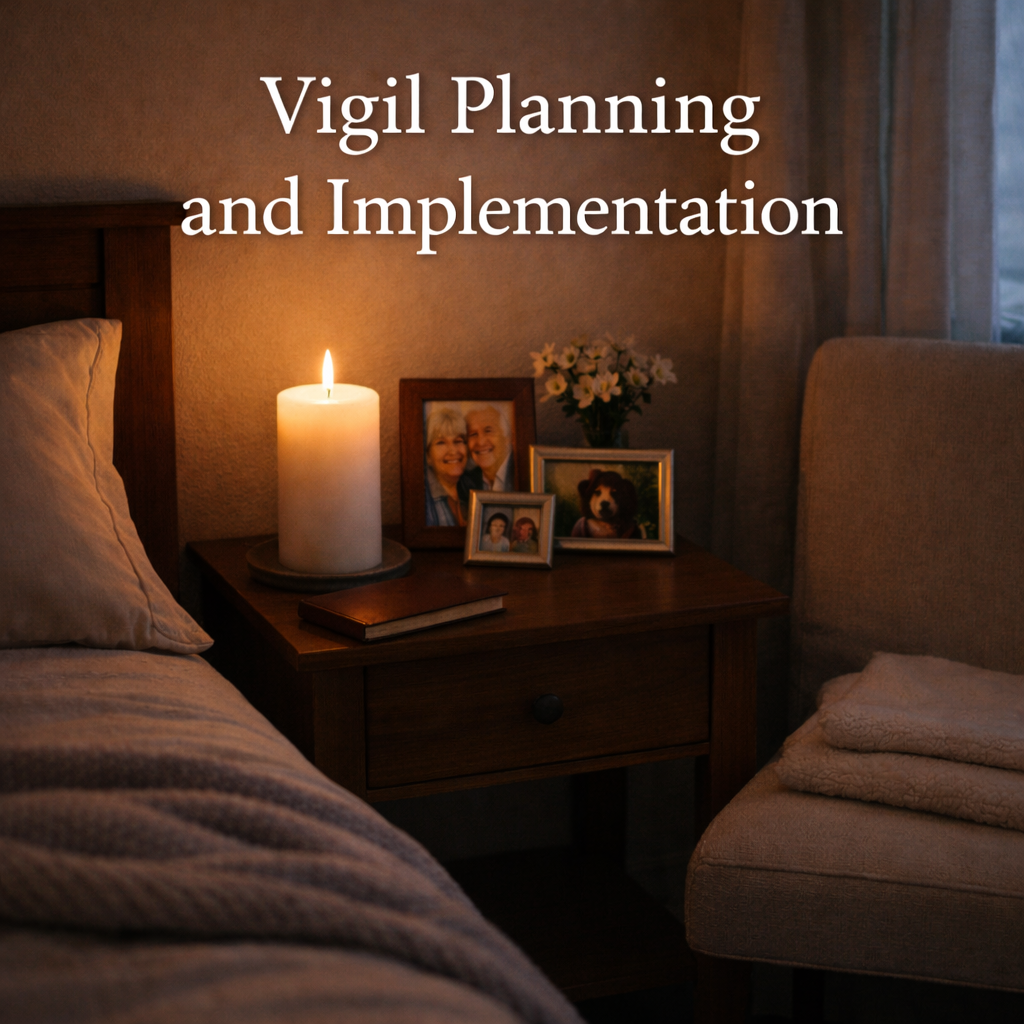
One common aspect of vigil planning is attending to the physical environment or space of the vigil. Small changes can make a space feel calmer, safer, and more intentional.
This might include:
Softening or dimming lights
Reducing clutter or unnecessary noise
Playing gentle music or familiar sounds
Opening a window for fresh air, if appropriate
Using comforting textures, such as favorite blankets or pillows
Scents are sometimes used, such as lavender or frankincense, but these should always be approached gently. As the body changes near the end of life, sensitivity to smell can increase, and what feels comforting to one person may feel overwhelming to another. Less is usually more.
Nothing is required. These choices are simply ways of supporting comfort and honoring preference.
🌱 Presence and Comfort
The core of a vigil is presence. This may look like:
Sitting quietly nearby
Holding a hand or offering gentle touch
Reading aloud or sharing memories
Speaking softly, even if the person is unresponsive
Offering reassurance through calm, steady companionship
Simple acts such as applying lotion to hands or feet, or adjusting pillows can be deeply comforting. Light massage, if welcomed, can help ease tension and provide a sense of care and connection.
What matters most is attunement and noticing what seems to soothe, and responding with tenderness rather than agenda.
🌿 Personalization and Meaning
A vigil is an opportunity to reflect the life and values of the person who is dying. This might include surrounding them with:
Photographs or meaningful objects
Flowers or natural elements
Music they loved, played live or through a playlist
Readings, poems, prayers, or favorite songs
Some families invite musicians, such as harpists or singers, while others prefer recorded music or simple silence. Again, there is no correct approach. The guiding question is always: What feels right for this person?
🪶 The Vigil Plan: Supporting Everyone Involved
A written vigil plan can be a helpful tool, especially when multiple people are involved in care. This plan might include:
Who should be present, and when
Preferences for music, lighting, or rituals
Cultural or spiritual wishes
Contact information for hospice, clergy, or other supports
Guidance for what to do as death approaches
A plan does not lock anything in. It simply provides a shared understanding that can reduce stress and confusion during an emotionally tender time.
🌱 Shared Care and Support
Vigils are rarely meant to be held alone. Creating a schedule for family members, friends, or volunteers allows for continuous presence without exhausting any one person. This shared approach also reminds everyone involved that they are not carrying this moment by themselves.
Caregivers need care, too.
🕯️ Presence Is Enough
Perhaps the most important thing to remember about vigils is this: nothing elaborate is required. Silence can be enough. Sitting can be enough. Being there is enough.
A well-planned vigil helps create space for dignity, peace, and connection at the end of life. It supports the dying person and those who love them by shifting attention from fear or uncertainty toward compassion and presence.
🕯️ How Life & Death Services Can Help
Life & Death Services offers non-medical support for individuals and families who wish to plan or hold a vigil at the end of life. This includes education about what to expect, help creating a vigil plan, and compassionate presence during this sacred time.
Whether you are preparing in advance or responding to a moment that is already unfolding, you don’t have to navigate this alone. Sometimes the greatest gift we can offer at the end of life is simply to be there—attentive, steady, and kind.