
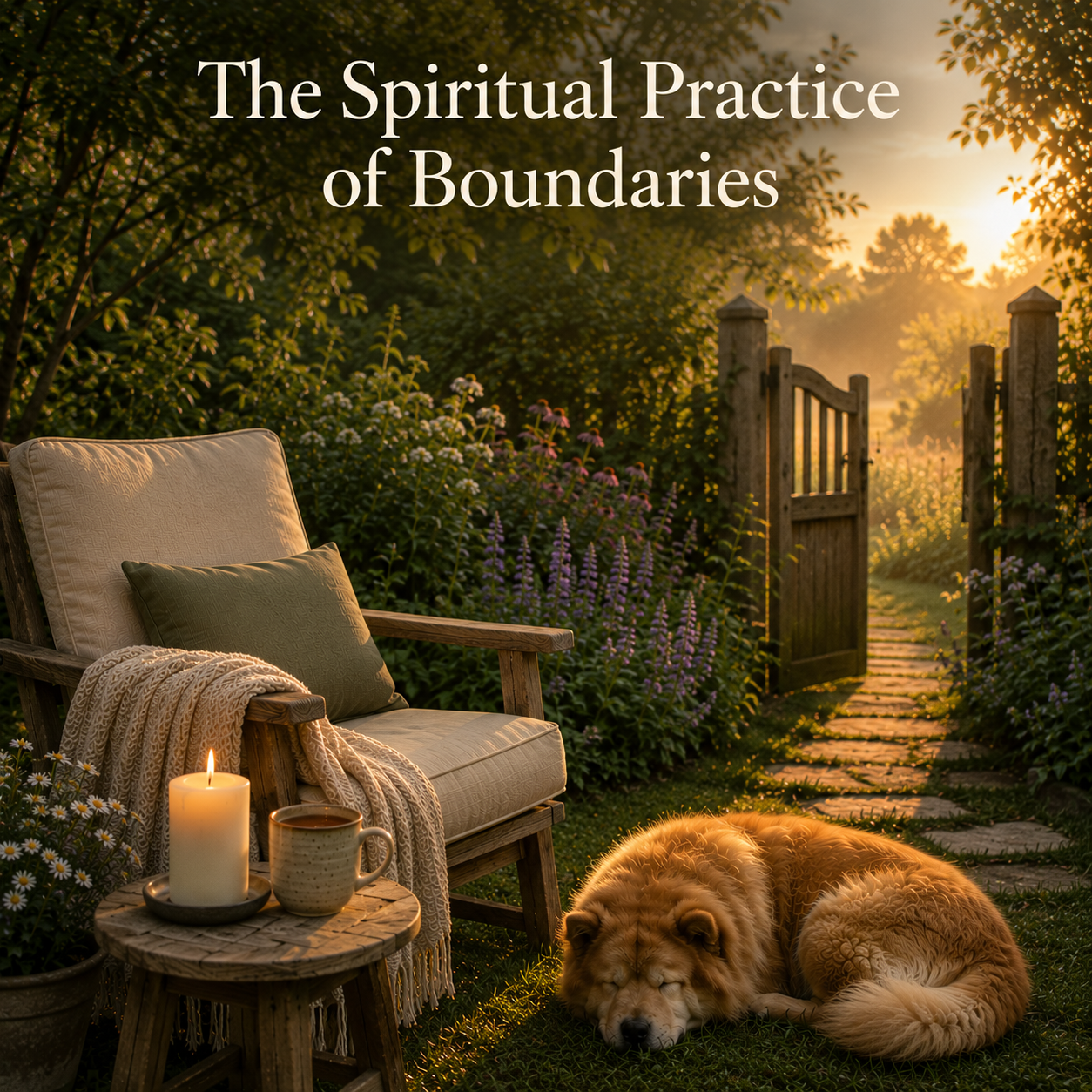
The Spiritual Practice of Boundaries: Saying Yes, Saying No, Staying Whole
Many people are taught that love means always saying yes.
Yes to helping.
Yes to giving more.
Yes to being available, accommodating, and needed.
For those in caregiving roles, helping professions, ministry, or deeply relational lives, constant yes-ing can begin to feel like proof of compassion and commitment. But over time, always saying yes can leave us exhausted, resentful, disconnected from ourselves, and unable to offer care in sustainable ways.
Boundaries are not the opposite of love.
Often, they are what make love sustainable.
🌿 Boundaries as Stewardship, Not Rejection
Healthy boundaries aren’t about shutting people out or becoming cold or self-focused. They’re about stewardship, caring responsibly for the time, energy, emotional capacity, and spiritual well-being we have been given.
As a social worker, one of the things I often remind my students is that self-care isn’t optional if we want to care well for others. We practice self-care so we can remain emotionally present, grounded, and capable of offering meaningful support to the people who depend on us.
Compassion becomes unsustainable when there’s no room for rest, nourishment, or recovery.
This kind of stewardship includes simple but essential practices:
Eating well
Staying hydrated
Moving and exercising in ways that support the body
Getting adequate sleep
Taking time for emotional and spiritual restoration
These are not luxuries. They are part of maintaining wholeness.
At the same time, it’s important to acknowledge that for many people, these forms of care can feel painfully out of reach. Financial strain, caregiving responsibilities, chronic illness, disability, trauma, demanding work schedules, lack of community support or resources, or simply trying to survive day-to-day life can make even basic self-care difficult.
Boundaries aren’t about achieving perfection or creating an ideal life untouched by stress. Sometimes they begin in very small ways: taking one quiet breath before responding, stepping outside for a moment of fresh air, asking for help, or recognizing that your needs matter too.
Even small acts of care and self-respect can become meaningful steps toward wholeness.
🕯️ Saying “No” So that “Yes” Can Mean Something
Many of us struggle to say no because we fear disappointing others, appearing selfish, or losing connection. We might say yes automatically out of guilt, obligation, or fear of rejection.
But a meaningful yes requires the freedom to say no.
When every request receives the same answer, our yes can lose its honesty. Overcommitment often leads to resentment, exhaustion, or emotional withdrawal, even in relationships and work we genuinely care about.
Resentment is often a sign that we have moved beyond wholehearted presence and into overextension.
There’s a difference between offering care freely and giving from depletion.
Boundaries help us move from obligation to intentional, grounded care. They allow our yes to come from sincerity rather than pressure.
🌿 Boundaries Are Gates, Not Walls
People sometimes imagine boundaries as walls that separate us from others. But healthy boundaries are more like gates.
A gate isn’t permanently closed. It allows us to choose what enters our lives and what does not. It helps us remain open without becoming overwhelmed.
Boundaries help us recognize:
Which relationships nourish us
Which commitments align with our values
What drains us beyond our capacity
When we need rest, solitude, or space
This discernment isn’t selfish. It’s wisdom.
Without some form of boundary, we can lose touch with our own needs, limits, and inner life.
🕯️ Rest as a Sacred Practice
Many people treat rest as something to earn after exhaustion. We push ourselves to the point of depletion and then wonder why we feel emotionally, physically, or spiritually disconnected.
But rest isn’t something we earn after depletion. It’s part of how we remain whole.
Quiet moments matter:
Sitting in silence with a cup of…
Walking with a dog, stroking a kitty
Lighting a candle at the end of the day
Prayer, meditation, journaling, or deep breathing
Turning away from constant noise and demands
These moments are not wasted time. They’re ways of returning to ourselves.
Rest creates space for clarity, compassion, and presence to emerge again.
🌿 Boundaries in Relationships
Healthy boundaries are deeply relational.
They’re not punishments or acts of withdrawal. They’re honest expressions of what allows us to remain emotionally present and connected.
Boundaries might sound like:
“I care about you, but I cannot take this on right now.”
“I need rest before I can respond well.”
“I want to support you without losing myself in the process.”
Loving others doesn’t require abandoning ourselves. In fact, relationships often become healthier when boundaries allow honesty, clarity, and mutual respect to grow.
✨ The Spiritual Courage of Disappointing Others
One of the hardest parts of boundary work is accepting that some people might not understand our limits.
Saying no can bring discomfort, guilt, or fear. We might worry about being seen as selfish, uncaring, or unavailable. But constantly abandoning ourselves in order to avoid disappointing others eventually harms both ourselves and our relationships.
There’s spiritual courage in remaining compassionate while still honoring your limits.
Not every need is yours to meet.
Not every request requires a yes.
Not every act of love requires self-erasure.
Sometimes the healthiest thing we can offer is honesty.
🌿 Staying Whole
Boundaries help us stay connected to who we are beneath obligation, pressure, and exhaustion.
They create room for:
Sustainable compassion
Clearer choices
More honest relationships
Emotional and spiritual presence
A deeper sense of alignment with our values
When we honor our limits with compassion, we become more capable of offering genuine care to others.
Not perfect care.
Not endless care.
But wholehearted care.
🕯️ Final Reflection
Boundaries are not about becoming less loving. They’re about loving in ways that allow us to remain present, honest, and whole.
Sometimes the most sacred things we can say are:
“Yes.”
“No.”
“Not right now.”
“I need rest.”
These words, spoken with honesty and compassion, can become acts of deep spiritual integrity.
👉 At Life and Death Services ~ Spiritual Direction & Reiki Services, I companion individuals who are navigating caregiving, burnout, grief, transition, and questions of meaning and balance. Through spiritual direction, reflective listening, and gentle practices of grounding and presence, we create space to reconnect with what sustains the spirit and supports a more whole and compassionate way of living.