
The Healing Power of Routine for Senior and Special-Needs Pets
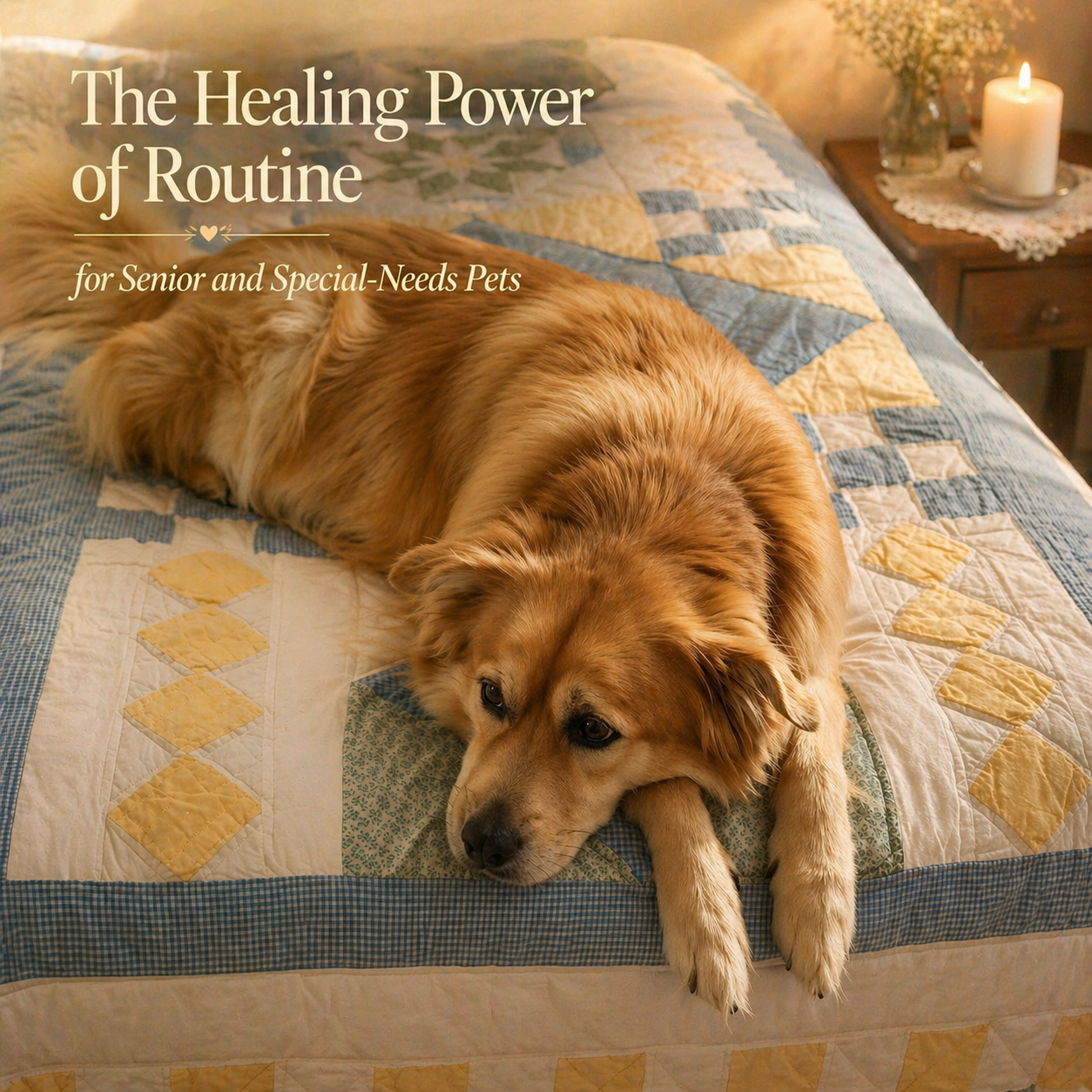
As our pets age or begin to face physical or cognitive challenges, the changes we see are not always easy to understand. A once energetic dog may move more slowly. A predictable routine may begin to shift. Familiar behaviors can change in ways that feel confusing for both pet and caregiver.
In these moments, one of the most powerful forms of support we can offer is something simple and steady: routine.
Routine is more than a schedule. It becomes a source of comfort, communication, and quiet reassurance in a world that may no longer feel as familiar as it once did.
🌿 Why Routine Matters
For senior and special-needs pets, predictability helps reduce anxiety and confusion. Regular feeding times, walks, and rest periods create a rhythm your pet can rely on. Even when their body feels different or their surroundings seem uncertain, these repeated patterns offer a sense of stability.
Routine also supports cognitive function. For pets experiencing changes such as Canine Cognitive Dysfunction, familiar patterns can help anchor them in the present moment.
In a changing world, routine becomes something that stays the same.
🐾 Routine as a Form of Communication
Our pets may not understand words in the way we do, but they understand patterns.
Over time, routine becomes a language they can trust:
A meal at the same time each day says, you are safe.
A familiar bedtime ritual says, you are not alone.
A walk at a predictable time says, the world is still steady.
When so much else is changing, these small, repeated experiences help your pet feel grounded and secure.
🕯️ Micro-Routines That Matter
Routine doesn’t have to be complicated to be meaningful. Small, consistent gestures can become powerful sources of comfort:
Saying the same gentle phrase before meals
Offering a favorite blanket at bedtime
Sitting together quietly at the same time each day
Lighting a candle during moments of rest or reflection
These small acts create familiarity and signal safety in ways your pet can feel.
If you choose to include scent as part of your routine, keep it subtle and pet-safe. Many older dogs are more sensitive to strong smells, so avoid heavily scented candles, essential oils, or diffusers unless you are certain they are safe and well-tolerated. Unscented candles or very mild, natural scents are often the best choice, allowing the moment itself—not the fragrance—to be the source of calm.
🌿 Adapting Routine with Compassion
Routine should be steady, but not rigid.
As your pet’s needs change, routines may need to shift. Walks may become shorter. Rest periods may increase. Mealtimes may adjust to support appetite or medication schedules.
These changes are not disruptions, they are acts of care.
Maintaining the pattern of routine, even as the details evolve, helps your pet continue to feel safe and supported.
💛 Supporting Yourself as a Caregiver
Routine doesn’t just help your pet, it can support you, too.
Caring for a senior or special-needs animal often brings uncertainty, emotional strain, and moments of grief. A shared daily rhythm can provide grounding for both of you.
These routines become small anchors in your day, moments where connection, presence, and care come into focus.
🌙 Walking This Path Together
As your pet’s world changes, routine becomes a quiet promise:
You are safe.
You are loved.
I am here.
This season of life may ask for more patience, more presence, and a slower pace. But within that slowing, there is also an opportunity for deeper connection.
Routine, in its simplicity, becomes a form of love.
✨ Final Reflection
In a world that may feel unfamiliar or uncertain, routine offers something steady and true.
It doesn’t ask for perfection, only presence.
And in that presence, even the smallest moments—feeding, resting, sitting side by side—become meaningful in ways that matter deeply to both you and your pet.
At Life and Death Services ~ Companion Animal Care & Support, I companion people and their pets through seasons of change, offering gentle guidance, emotional support, and practical ways to navigate aging, illness, and end-of-life care with compassion and connection.