
Supporting a Loved One Who Is Afraid of Dying
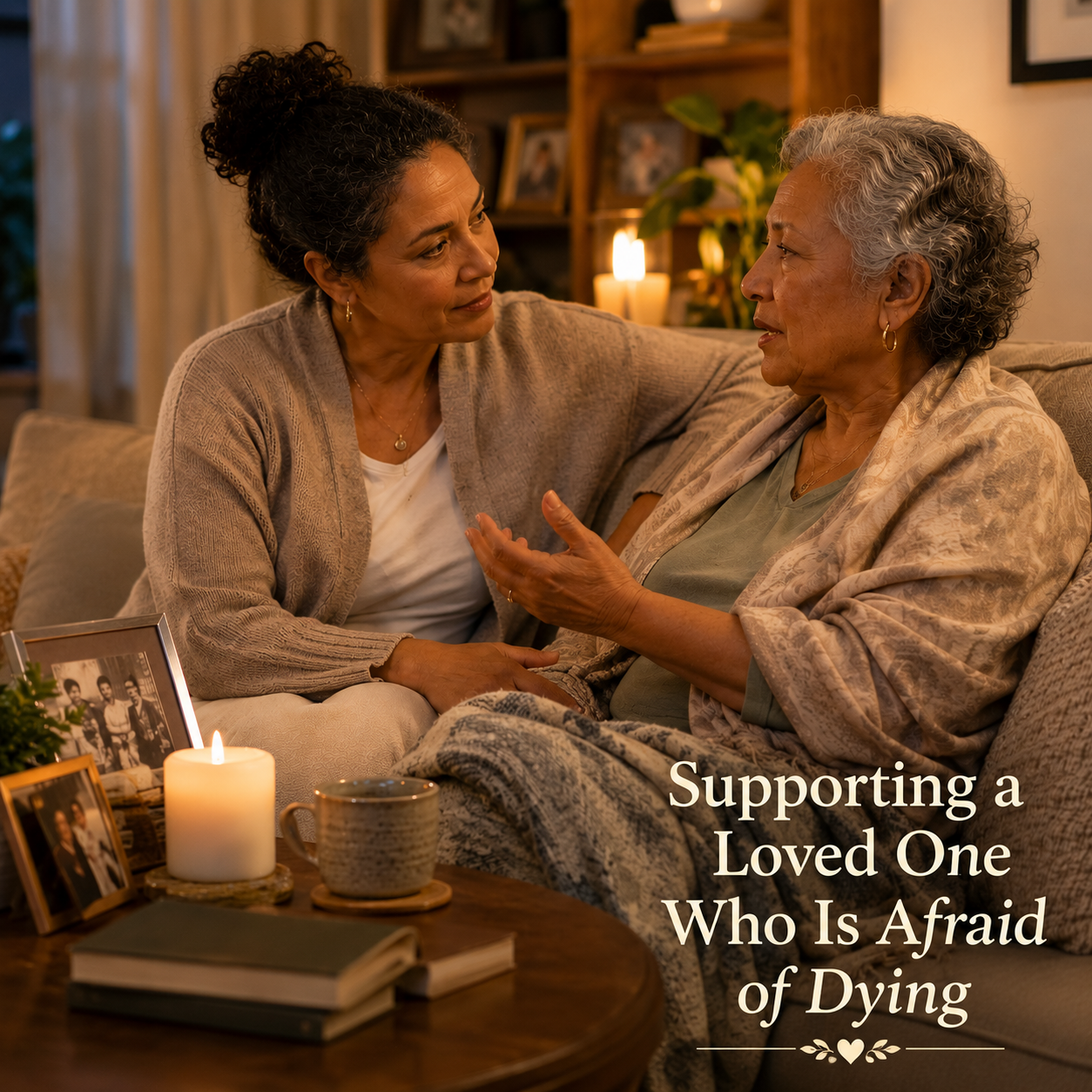
Fear is one of the most common—and least talked about—experiences at the end of life.
When someone you love is afraid of dying, it can be difficult to know what to do. You want to comfort them, reassure them, or find the perfect words to ease their anxiety. Yet many people discover that there are no magic words. What often helps most is something much simpler: your presence.
Being willing to sit with someone's fear, rather than trying to take it away, can be one of the greatest gifts you offer.
🌿 Fear Is More Common Than Many People Realize
Fear of dying can take many forms. Some people worry about physical pain or discomfort. Others fear losing control, leaving loved ones behind, or becoming a burden. Some struggle with uncertainty about what happens after death. Others grieve the loss of future experiences they know they’ll miss.
It’s also important to remember that fear and peace can exist together. A person can be deeply spiritual and still feel afraid. They may have accepted that death is coming while continuing to experience moments of anxiety, sadness, or uncertainty.
There is no right or wrong way to feel as death approaches.
💛 Listen More Than You Speak
When someone shares their fears, our instinct is often to reassure them.
We might say things like:
"Everything will be okay."
"Don't think about that."
"You need to stay positive."
"There's nothing to be afraid of."
Although these responses are usually offered with love, they can unintentionally shut down deeper conversation. Instead, try listening with curiosity and compassion.
You might say:
"That sounds really hard."
"Tell me more about what you're feeling."
"What worries you the most?"
"I'm here with you."
You don't need to solve or resolve their fear. You don't need to have answers. Simply allowing someone to express what’s in their heart can be profoundly comforting.
🌿 Make Space for Their Questions
As people approach the end of life, questions often arise.
They might wonder:
What will happen to the people they love?
Will they be remembered?
What happens after death?
Did their life matter?
Have they done enough?
Some questions have no clear answers. Resist the temptation to fill every silence or provide certainty where none exists. Instead, allow room for reflection. Let your loved one guide the conversation and share as much (or as little) as they wish.
Sometimes what people need most isn’t an answer, but a witness.
🌿 When Fear Is Connected to Unfinished Business
Sometimes fear at the end of life is connected to unresolved relationships, regrets, or things left unsaid.
A loved one may express concern about a family conflict, a friendship that drifted apart, a mistake they regret, forgiveness never given or asked for, or opportunities they never pursued. Others might carry private burdens they have never fully shared.
You don’t need to become a counselor or encourage disclosures they’re not ready to make. Instead, create space for honest conversation.
Questions such as:
"Is there anything that feels unfinished?"
"Is there someone you're thinking about?"
"Would it help to talk about what's weighing on you?"
can gently open the door.
For some people, healing comes through conversation. For others, it can come through writing letters, sharing stories, asking for forgiveness, offering forgiveness, or reconnecting with important relationships.
If guilt, shame, trauma, or emotional distress feels overwhelming, support from a counselor, social worker, chaplain, hospice team member, or other qualified professional can be valuable.
🌿 Help Them Focus on What Matters Most
As life draws closer to its end, many people naturally begin reflecting on what has mattered most.
This can be a meaningful time to:
Look through photographs together
Share favorite memories
Record family stories
Write letters to loved ones
Create legacy projects
Express gratitude
These conversations remind people that their lives have touched others in important ways.
Legacy isn’t just about accomplishments. Often it’s found in relationships, kindness, love, and the countless small ways someone has shaped the lives of others.
🌿 Support Their Sense of Control
Fear often grows when people feel powerless. While no one can control every aspect of dying, many people find comfort in having choices wherever possible.
You might talk about:
Advance directives
Care preferences
Comfort measures
Spiritual or religious practices
Who they would like present
Music, readings, or rituals that bring comfort
Even small decisions can restore a sense of dignity and agency.
🌿 Remember the Physical Side of Fear
Fear isn’t always purely emotional or spiritual. Pain, shortness of breath, insomnia, medication changes, and physical discomfort can all increase anxiety. Sometimes addressing physical symptoms significantly reduces fear.
Encourage open communication with physicians, hospice providers, palliative care teams, and other healthcare professionals. Comfort-focused care can make an enormous difference in quality of life.
💙 Take Care of Yourself Too
Supporting someone who’s afraid of dying can be emotionally exhausting. You may experience sadness, helplessness, anticipatory grief, or your own fears about death and loss. These feelings are normal.
Make space for your own support system. Talk with trusted friends, spiritual leaders, support groups, counselors, or other caregivers who understand what you are experiencing.
You do not have to carry this alone.
🕯️ Final Thought
When someone is afraid of dying, our instinct is often to search for the perfect words. Yet what many people need most is not an explanation. They need someone willing to stay. Someone willing to listen. Someone willing to sit beside them in uncertainty and remind them that they do not have to face their fears alone.
Sometimes the most powerful gift we can offer is simply our presence.
At Life and Death Services, I companion individuals and families through the emotional, spiritual, and practical challenges that often arise near the end of life. Through deep listening, thoughtful conversation, and nonjudgmental presence, we create space for difficult emotions, meaningful reflection, and the reassurance that no one has to walk this path alone.