
Remembering Our Pets Through Legacy Keepsakes
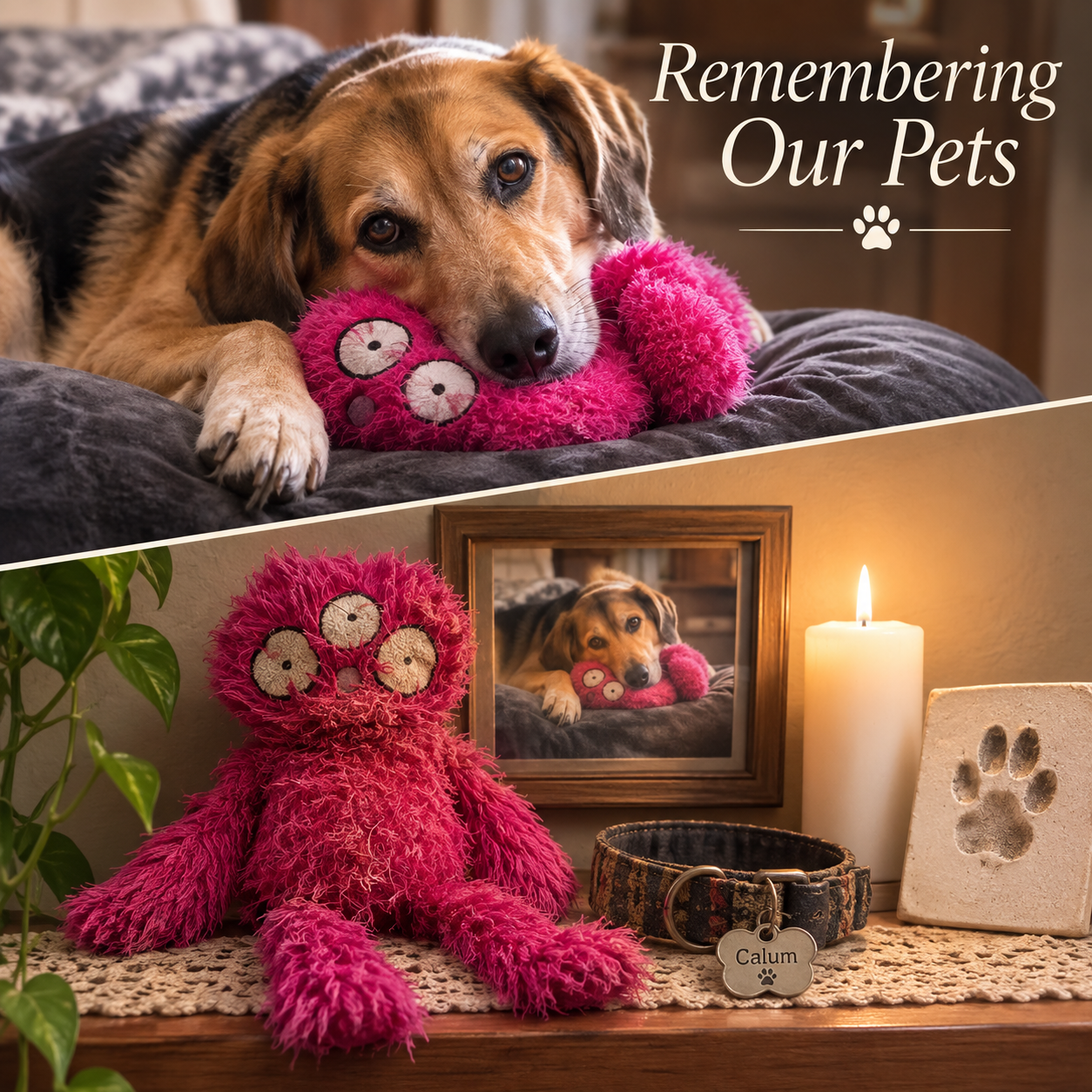
After an animal we love dies, ordinary objects can become anything but ordinary.
A collar that once hung by the door may suddenly feel impossible to move. A favorite toy still sits where it was left. There may be a blanket covered with fur that we can't quite bring ourselves to wash, or a food bowl that remains in its familiar place because putting it away feels too much like acknowledging that our companion really isn't coming back.
To someone else, these may simply look like things. To us, they can hold pieces of a relationship.
Legacy keepsakes give us one way to preserve some of those pieces. They might be carefully created memorials, photographs, paw prints, jewelry, or artwork. But they can also be wonderfully ordinary things: a worn collar, a favorite ball, a handwritten story, or the tag that jingled every time our dog walked through the house.
There is no single right way to remember an animal we have loved. What matters isn't what a keepsake looks like or what it costs. What matters is the relationship it helps us remember.
🐾 More Than a Memento
When someone dies, objects associated with them often take on new meaning. The same thing can happen when we lose a companion animal. The collar that was once simply part of the morning walking routine becomes their collar. The blanket becomes the blanket they always slept on. The battered stuffed animal isn't just a toy anymore; it's the ridiculous toy they carried everywhere even after half the stuffing was gone.
These objects can become part of what grief researchers sometimes call a continuing bond—the ongoing relationship we maintain with someone we love after their physical presence is gone. Remembering, telling stories, keeping meaningful objects, maintaining traditions, and finding new ways to carry that relationship forward can all be part of grieving.
A keepsake doesn't prevent us from grieving, nor does it mean we're unwilling to “move on.” It gives memory somewhere tangible to rest.
💙 Creating Keepsakes Before Goodbye
Legacy work doesn't have to begin after death. When an animal is aging or living with a serious illness, families can choose to create keepsakes while there is still time. That doesn't mean they’re giving up, or assuming death will happen immediately. It can simply mean recognizing that this relationship is precious and wanting to preserve parts of it.
You might make a paw or nose print, clip a small lock of fur, or take photographs of your companion's paws, ears, whiskers, or other features you know by heart. You might record the sound of a purr, bark, meow, howl, or even the snoring that has kept you awake for years.
And don't forget the ordinary photographs. We naturally think about taking a beautiful portrait, and those photographs can become treasures. But you might someday be equally grateful for the picture of your dog asleep upside down on the couch, your cat occupying the laundry basket, or your companion waiting in the kitchen because they know perfectly well what time dinner is supposed to happen.
The life you're trying to remember isn't only the beautiful moments. It's the everyday ones.
🪶 The Things We Think We'll Never Forget
There are details about the animals we love that seem so familiar we can't imagine ever forgetting them: the sound of their feet crossing the floor, the particular spot where they waited for us, the expression that meant they wanted something, or the way one ear folded differently from the other.
Maybe there was an elaborate ritual required before settling down for the night, or a nickname that somehow evolved from their actual name into something completely ridiculous. Years later, those tiny details can become some of the memories we most want to recover.
Consider writing them down.
You don't need to create a formal biography of your pet. A notebook, document on your computer, or collection of notes on your phone can hold the small stories as they occur to you: favorite foods, annoying habits that you secretly adored, places you went together, things they were afraid of, people they loved, words they understood, the trouble they got into, and the moments that still make you laugh.
If other people loved your companion, invite them to contribute memories too. You might discover stories you never knew, or realize that the same animal occupied a slightly different place in every person's heart.
Those stories are keepsakes too.
🌿 Different Ways to Remember
There are countless ways to create a physical memorial. A collar and tags can become part of a shadow box with a photograph. Paw prints can be framed or incorporated into jewelry. A favorite blanket or bandana might become part of a quilt or pillow. Photographs can become an album or photo book, and commissioned artwork can capture a beloved expression or familiar pose.
Some people create a memory box containing several small objects. Others choose an urn, memorial stone, garden marker, ornament, or piece of jewelry that can be worn close to the body. A candle, photograph, and collar might become a small remembrance space in the home.
Digital memories matter too. Videos preserve movement and sound in ways photographs cannot. A digital album can bring together years of pictures scattered across phones and computers, while voice recordings and videos can preserve sounds we didn't realize we’d miss so much.
But the most meaningful keepsake doesn't have to be something you purchase. Sometimes it’s the collar hanging from a doorknob, a favorite photograph tucked into a frame, or a handwritten page filled with all the silly nicknames you used over the years. A smooth stone brought home from a favorite walking trail can carry more meaning than an expensive memorial created by someone else.
The value of a keepsake isn't determined by its price. It's determined by the story attached to it.
🌱 A Legacy Doesn't Have to Be an Object
Sometimes the most meaningful way to remember an animal is through something we continue to do. You might plant a tree or flowers in a place where your companion loved to lie in the sun, walk a favorite trail on the anniversary of their death, or visit a place you enjoyed together. Perhaps you donate food, blankets, or money to an animal shelter in their name.
For some people, volunteering, fostering, or helping another senior or special-needs animal becomes part of a companion's legacy. The love and caregiving skills developed during one relationship continue outward into the world.
That doesn't mean another animal replaces the one who died. Relationships aren't interchangeable, and a new dog or cat doesn't occupy the same place in our lives, or our stories. Instead, sometimes the relationship we've lost changes what we’re able to offer the next animal who enters our life. In that way, legacy can be something we keep, but it can also be something we pass forward.
💛 What If You Aren't Ready?
After a death, people sometimes receive well-intentioned advice about what they should do with a companion's belongings: put the bowls away, wash the bedding, donate the food, move the bed. Others may offer the opposite advice, urging us to save everything because we might regret letting something go.
There isn't a universal timetable or answer.
One person might need to put things away immediately, because seeing them is unbearably painful, while someone else might leave a dog's bed beside their own for months. Neither response tells us how deeply that person loved their animal, or whether they are grieving “correctly.”
If you aren't ready to decide, you don't necessarily have to. A box can be useful for gathering belongings that feel important and keeping them somewhere safe without deciding today what they will eventually become. Grief changes over time, and something you cannot bear to look at now might become deeply comforting later. You’re allowed to give yourself time.
🕯️ What If You Didn't Save Anything?
Sometimes there isn't time to think about keepsakes. A death can be sudden. Someone else may have disposed of belongings. A veterinary clinic might not have offered a paw print, or you may have declined one in the shock of the moment and later wished you'd said yes. Perhaps you washed the blanket before realizing you’d someday miss finding fur on it.
Grief has an extraordinary ability to turn hindsight into guilt. We can find ourselves thinking, I should have saved that. I wish I'd taken more pictures. Why did I throw that away?
If this is part of your grief, remember that a keepsake is a way of representing a relationship. It is not the relationship itself. You haven't lost the years you shared because you don't have a paw print, and you haven't loved less because you don't have ashes, a memorial necklace, or a box of belongings.
You can also create something from memory at any point. Write down the stories you remember, gather photographs from friends and family, draw a picture, plant something, light a candle, make a donation, or write your companion a letter describing the life you shared. There’s no deadline for creating a legacy, and there’s no requirement that you create one at all.
🌈 When a Keepsake Hurts Before It Comforts
It's also worth remembering that memorial objects don't always feel comforting right away. A paw print might make you cry, opening a photo album might be impossible for a while, and hearing a recording of your dog's bark or your cat's purr might feel wonderful one day and devastating the next.
That doesn't mean the keepsake was a mistake.
Grief changes our relationship with reminders. Something that feels painfully connected to absence early in grief might eventually become connected more strongly to memory, gratitude, or even laughter. Some objects may always carry a little of both, because love and sorrow are quite capable of occupying the same space.
There’s no need to force yourself to interact with a keepsake before you're ready. It can wait for you.
🐾 What Would You Want to Remember?
If your companion animal is still with you, particularly if they’re growing older, you might spend a little time noticing the things you would want to remember someday. This isn't because you need to begin saying goodbye. It’s because this is their life with you now, and ordinary moments have a way of becoming precious later.
Take the photograph. Record the ridiculous snore. Write down the story you've told a hundred times, or save the tag when you replace the collar. Notice the weight of their head against your leg, the particular way they greet you when you come home, or the sounds they make when they're dreaming.
Legacy work can be about preparing for loss, but it can also invite us to pay closer attention while the relationship is still unfolding. Sometimes thinking about what we hope to remember someday helps us notice more fully what’s happening today.
🕯️ Carrying Love Forward
At Life & Death Services, companion-animal end-of-life and pet-loss grief support can include conversations about remembrance, legacy, and the continuing bond you share with your animal.
For families approaching the end of a companion's life, we can explore what you might want to preserve and what kinds of rituals or keepsakes feel meaningful to you. After a death, grief support can provide space to tell the stories, remember the relationship, and discover how you want to carry that love forward.
There’s no keepsake large enough to contain an entire relationship, but maybe that's not what we're asking it to do. A keepsake doesn't hold the animal we loved. It holds a piece of the life we shared with them.
Sometimes that small piece—a collar, a photograph, a paw print, a story—is enough to take us back to a moment we never want to lose.