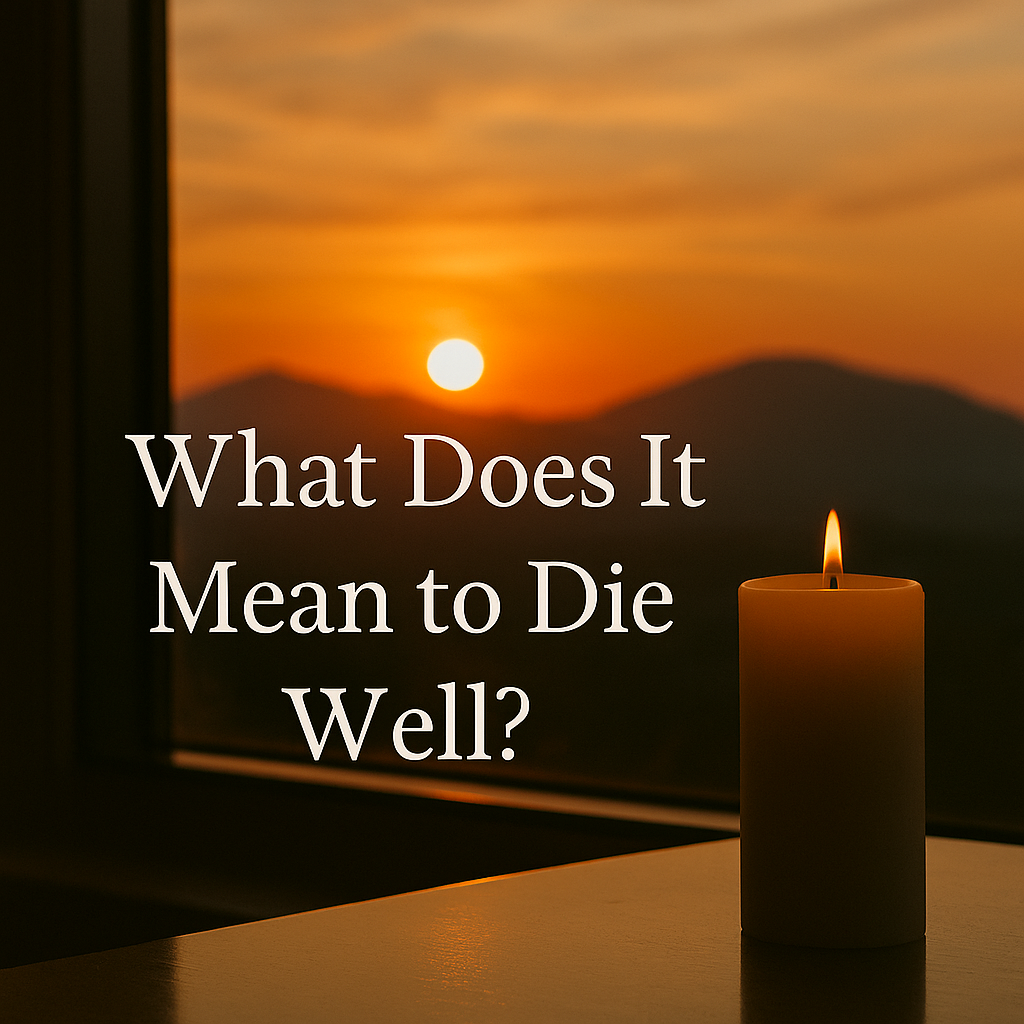
The phrase “dying well” can stir up many different feelings. Some may imagine a peaceful passing surrounded by loved ones. Others may think of dying without pain, with dignity, or in a way that honors their faith or values. But the truth is, there isn’t a single definition of what it means to die well.
🌿 Dying Well Is Not One-Size-Fits-All
Every person carries their own hopes, fears, and priorities into the end of life. For some, dying well means avoiding aggressive medical interventions. For others, it means pursuing every possible treatment. Some may long to be at home; others may feel safer in a hospital or hospice setting.
For some people, dying well also means being able to choose the time and place of their death, especially if they are living with a terminal illness. In many cultures, this includes a strong wish to die at home. In some states and countries, it may include access to medical aid in dying (also called assisted dying), where individuals facing certain conditions can legally choose to end their life on their own terms.
Importantly, what “dying well” means often depends on culture and personal experience. Different traditions bring their own wisdom, rituals, and values to the end of life. Some cultures emphasize family presence and spiritual rituals, while others may focus on independence, medical choice, or community mourning. Your story, your background, and your beliefs shape what matters most to you.
💛 Common Themes of a Good Death
Even though each person’s definition is unique, research and lived experience show that many people share similar hopes:
Comfort and Dignity - Relief from pain and distress.
Autonomy - Having a say in how and where they die.
Choice of Time and Place- For some, the ability to die at home or to access medical aid in dying.
Connection - Being surrounded by people they love or feeling spiritually connected.
Closure - Opportunities to say goodbye, express love, forgive, and be forgiven.
Legacy - Leaving behind words, blessings, or memories for those who remain.
🕯️ Conversations That Matter
Talking about death isn’t easy but asking questions like “What would a good death mean to me?” can open space for meaningful conversations with family, friends, and care providers.
These conversations help ensure that when the time comes, your wishes are known and respected. They also give loved ones peace of mind, knowing they are honoring your vision of a good death.
🌌 Living Well, Dying Well
In many ways, dying well is inseparable from living well. The choices we make about relationships, values, and purpose throughout life shape how we face its final chapter. By reflecting now, and talking openly about what matters, we can approach death not with fear, but with intention.
✨ Final Thought
Dying well doesn’t look the same for everyone, and that’s the point. It is a deeply personal journey, influenced by culture, beliefs, and individual experience. At its heart, dying well means leaving this world in a way that reflects who you are and what matters most to you.
👉 At Life and Death Services ~ End-of-Life Planning & Support, I companion individuals and families as they explore these questions and make plans that honor their unique values, traditions, and hopes. Together, we can create space for both peace and meaning at the end of life.