
Understanding Doggie Dementia: Supporting Your Senior Dog with Love and Patience
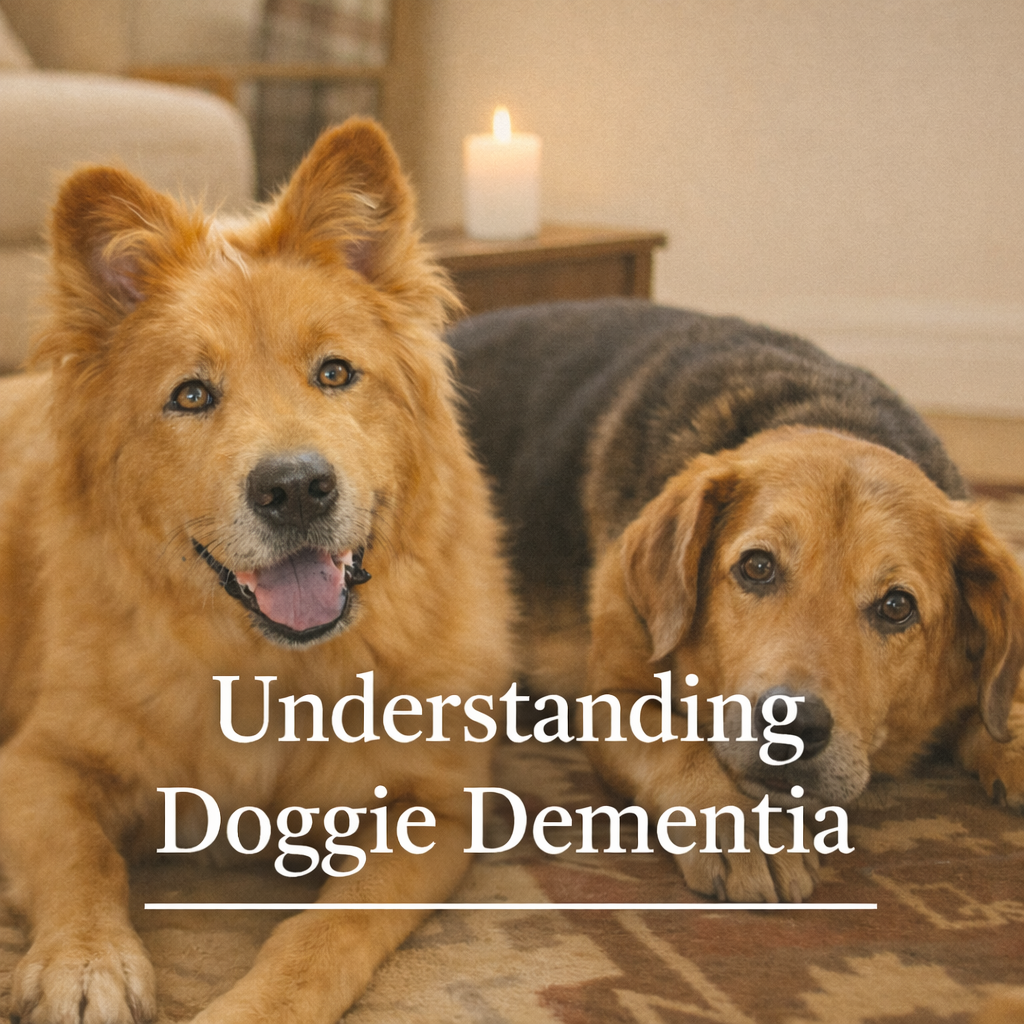
As our dogs age, the changes we notice are not always physical. Sometimes the shifts are quieter, more confusing, and harder to name. A dog who once knew every corner of the house may suddenly seem lost. A reliable routine might unravel. Sleep patterns change. Anxiety creeps in.
When this happens, many caregivers feel a mix of worry, grief, and uncertainty. You may find yourself wondering if you’re imagining things, or if this is simply “normal aging.” Often, it’s neither imagined nor insignificant.
These changes are real. And they deserve understanding, patience, and compassion.
🐾 What Is Doggie Dementia?
Doggie dementia—clinically referred to as Canine Cognitive Dysfunction (CCD)—is a progressive condition that affects the aging brain. It’s often compared to Alzheimer’s disease in humans, though each dog’s experience is unique.
CCD tends to develop gradually and may include symptoms such as:
Disorientation or confusion in familiar places.
Changes in sleep patterns, including restlessness at night.
Increased anxiety, clinginess, or vocalization.
Decreased interest in play or social interactions.
Accidents indoors despite prior house-training.
Staring into space or getting stuck in corners.
Not every senior dog will develop cognitive decline, and symptoms can overlap with other medical conditions. A veterinary exam is always an important first step to rule out any underlying health issues and to explore supportive care options.
🕯️ How Doggie Dementia Can Affect Daily Life
Living with a dog who has cognitive changes can be emotionally challenging. Many caregivers experience anticipatory grief—mourning the gradual changes while their beloved dog is still physically present. You may feel sadness for what’s been lost, frustration when routines break down, or guilt when you feel overwhelmed.
Please know that these responses are normal.
For your dog, the world may feel unfamiliar and unpredictable. Spaces they once navigated with ease may now feel confusing. That confusion can show up as pacing, restlessness, withdrawal, or changes in behavior.
During this stage of life, your steadiness and presence become especially important.
🌿 Gentle Ways to Support Your Senior Dog
While there is no cure for doggie dementia, there are meaningful ways to support your dog’s comfort, dignity, and emotional well-being. Here are some suggestions, but be sure to speak to your veterinarian.
Maintain simple, predictable routines
Regular feeding times, walks, and bedtime rituals help create a sense of safety and familiarity.Create a calm environment
Soft lighting at night, minimizing loud or sudden noises, and keeping furniture in consistent locations can reduce confusion and anxiety.Offer reassurance through presence
Gentle touch, a calm voice, and simply being nearby can be deeply comforting, even when your dog seems distant or disengaged.Adjust expectations with compassion
Accidents, pacing, or disrupted sleep are symptoms of cognitive change, not behavior problems. Responding with patience helps preserve trust and emotional safety.Support the whole being
Many families find comfort-focused approaches such as gentle bodywork (dog massage), calming routines, or energy-based practices (Canine Reiki) can be helpful alongside veterinary care.
🐾 Walking This Path Together
Caring for a dog with dementia invites a slower, more attentive way of being. It asks us to meet our dogs where they are now, not where they used to be, and to redefine what love looks like in this season of life.
Your dog doesn’t need perfection. They need familiarity. They need patience.
They need you.
If you’re walking this road with a senior dog, know that you are not alone. There is deep meaning in showing up with presence and tenderness, and in honoring your dog’s life with love through every transition.
🕯️ You’re Not Alone
Supporting a dog through cognitive decline can feel isolating, especially when the changes are subtle or misunderstood. If you find yourself needing guidance, reassurance, or simply a compassionate listener, support can make a meaningful difference.
At Life and Death Services, we honor the deep bond between humans and their animal companions and offer gentle, non-medical support during life transitions, including those that unfold slowly and quietly.
Because love like this doesn’t disappear. It changes form. And it deserves care, every step of the way.