
Fostering Dogs on Hospice: A Gift of Comfort and Compassion
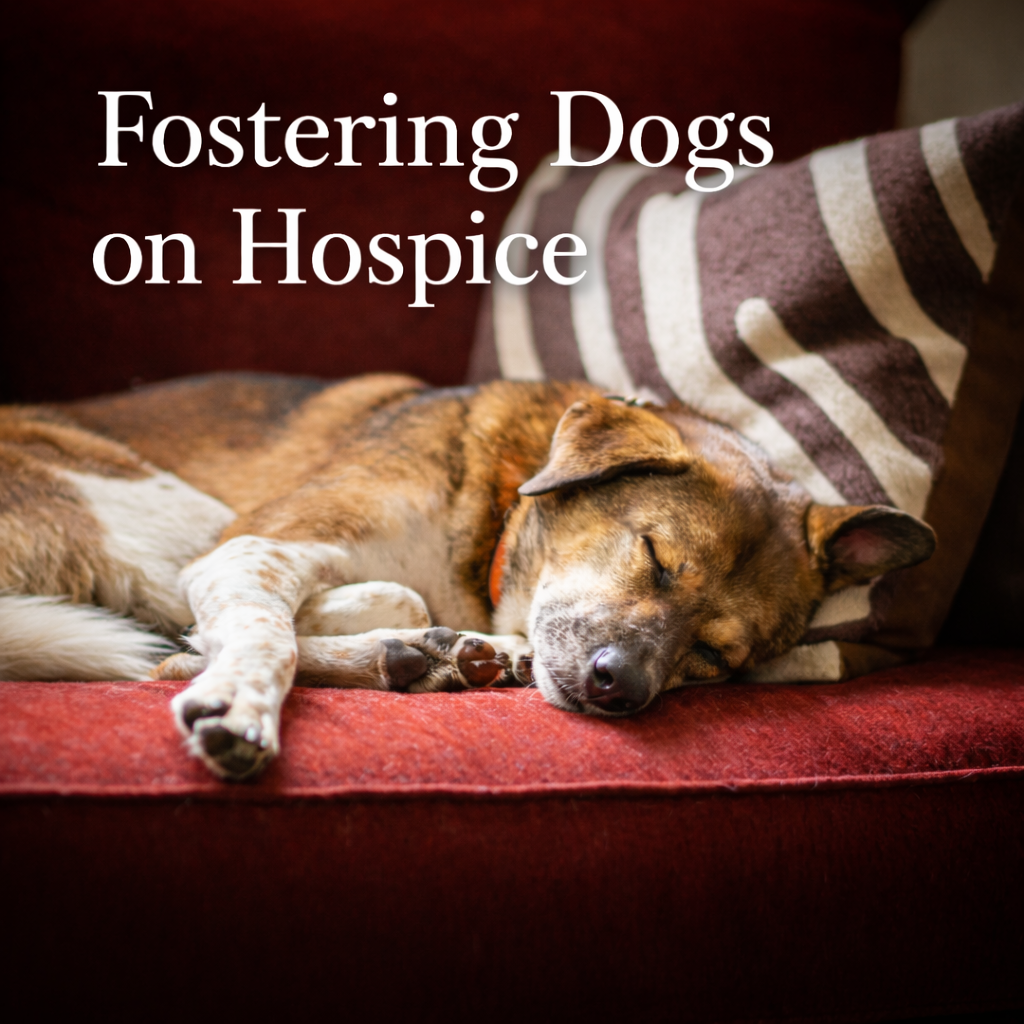
There is a particular kind of love that shows up at the end of a life. It is quieter, slower, and deeply attentive. Hospice fostering for dogs—often lovingly called “fospice”—lives in this space. The goal is not to fix, cure, or prolong at all costs, but to offer comfort, dignity, and presence for whatever time remains.
Fostering a dog on hospice means welcoming a terminally ill or very elderly dog into a home during their final days, weeks, or sometimes months. In most cases, rescue organizations continue to cover medical care, medications, food, and supplies, allowing the foster caregiver to focus fully on what matters most: creating a safe, loving environment where the dog can rest, be known, and be accompanied through the end of life.
For dogs nearing the end, a hospice foster home can be profoundly different from a shelter or kennel environment. Instead of concrete floors and constant noise, there is a soft place to sleep, familiar rhythms, and a human who notices the small things—how breathing changes at night, which foods still bring joy, when touch is comforting and when space is needed. These details matter.
Hospice fostering is also an act of respect for the dog’s life as it has been lived. These dogs are not projects or problems to be solved. They are beings with histories, preferences, and personalities, still deserving of care, even as their bodies begin to slow down… sometimes especially then.
🐾 What Hospice Fostering Often Involves
Hospice fostering does ask something special of the humans who choose it. Care often includes managing medications, supporting mobility changes, responding to confusion or senility, and providing extra comfort and reassurance. Some days are quiet and routine; others require flexibility, patience, and emotional steadiness.
There may be more frequent veterinary visits, especially early on, as the dog’s needs are assessed and care plans adjusted. Some dogs require specialized diets, mobility assistance, or close companionship. Others simply need a calm presence and a place where they can finally exhale.
What hospice fostering does not mean is doing this alone. Rescues, veterinary teams, and end-of-life support professionals walk alongside foster caregivers, offering guidance, reassurance, and practical help. Asking questions, expressing uncertainty, and naming grief are all part of compassionate care.
🐕🦺 Letting Go of the Myth that it’s “Always Brief” or “Only Tragic”
One common misconception about hospice fostering is that it is always short-lived or unbearably sad. While many hospice dogs do pass within weeks, others surprise everyone. With consistent care, safety, and love, some dogs stabilize, regain comfort, and live far longer than expected. In rare cases, a dog’s condition even improves enough for them to become adoptable.
Even when time is short, hospice fostering is not only about loss. Many foster caregivers speak of unexpected moments of peace: quiet afternoons, small rituals, and connections that feel deeply meaningful. These dogs, so near the threshold, often offer lessons about presence, tenderness, and the grace of being fully here.
🐕 A Different Measure of “Success”
Hospice fostering gently reframes what success looks like. It is not measured in months or years added, but in moments of comfort: a relaxed body, a wagging tail, a peaceful passing. It is measured in being present when it matters most.
Choosing to foster a dog on hospice is a quiet, courageous offering. It says: You matter. You are worthy of love until your last breath. And in return, many foster caregivers find that these dogs—so near the threshold—teach them something enduring about presence, tenderness, and the sacredness of an ordinary moment shared.
🕯️ You’re Not Alone
Walking alongside an aging or terminally ill dog can be both meaningful and emotionally heavy. Life & Death Services offers compassionate, non-medical support for people navigating end-of-life transitions with their companion animals, including emotional support, end-of-life planning, and space to reflect, grieve, and honor the bond you share.
You don’t have to do this alone.