
Caring for Yourself While Caring for an Aging Pet
Caring for an aging pet is an act of love. It’s also a responsibility that can quietly grow over time with more medications, more appointments, and more attention to changes that might once have seemed small or insignificant, but no longer are.
You may find yourself watching more closely. Listening more carefully. Adjusting your routines to meet their needs. And somewhere in the middle of all of that, it can become easy to forget about yourself.
🐾 The Hidden Weight of Caregiving
When a pet begins to age or face illness, caregiving often becomes part of daily life.
You might be:
Giving medications at specific times
Monitoring eating, drinking, continence, or mobility
Cleaning up accidents or helping with movement
Sleeping more lightly, listening for changes in the night
These are acts of devotion. But over time, they can also become exhausting—physically, emotionally, and spiritually.
Many people don’t recognize this as caregiver strain. But it is, and it matters for both you and your companion.
🕰️ Creating Gentle Structures
One of the most helpful things you can do, for both you and your pet, is to create a sense of rhythm by establishing consistent care routines.
This can:
Reduce stress
Make daily tasks feel more manageable
Help your pet feel secure
This might look like feeding, medication, and walks at regular times. A simple checklist for daily care tasks. And keeping supplies organized and easy to access.
Structure doesn’t remove the emotional weight, but it can make the day feel steadier.
🚧 Setting Boundaries Without Guilt
This is often one of the hardest things to do.
When we love our pets, we want to do everything possible for them. And yet, caring for them doesn’t mean losing yourself in the process.
Boundaries might look like:
Allowing yourself time to rest without constant monitoring
Saying no to additional responsibilities when you’re already stretched
Letting some things be “good enough” rather than perfect
Boundaries are not a sign of failure. They’re what make sustainable care possible, especially long-term.
🤲 Letting Yourself Receive Support
You don’t have to carry this alone.
Support can come in many forms:
A friend who can sit with your pet for an hour
A family member who helps with appointments
A pet sitter or veterinary technician who can step in when needed
An online or local support group where others understand what you’re going through
Sometimes the hardest part is simply asking. But allowing others to help doesn’t diminish your care, it strengthens it.
🌿 Caring for Your Own Body
In the midst of caregiving, your own needs can quietly slip to the side.
Try to return to the basics: rest when you can, eat regularly, step outside for fresh air at least once a day, and take short walks, even if they’re slow.
These are not luxuries. They’re necessities. You matter in this equation too.
💛 Practicing Self-Compassion
There will be moments when you question yourself.
Am I doing enough?
Did I miss something?
Should I be handling this differently?
These thoughts are common. And they can be heavy to carry.
Self-compassion means gently reminding yourself that you’re doing your best. That you can’t control everything. And, most importantly, that love doesn’t require perfection.
Your presence matters more than getting everything “right.”
🔥 Recognizing the Signs of Burnout
Caregiver burnout doesn’t always arrive all at once. It often builds slowly.
You might notice:
Persistent exhaustion, even after rest
Irritability or feeling emotionally overwhelmed
Difficulty concentrating or making decisions
Changes in sleep or appetite
A sense of numbness or detachment
If you recognize these signs, it’s not a failure. It’s a signal that you need support, rest, and care too.
🌻 Making Space for Joy
Even during caregiving, there can still be moments of connection.
A quiet moment together in the sun.
A slow walk where your pet pauses to sniff.
The comfort of simply sitting side by side.
These moments matter. They remind you why you’re doing this, and they offer both of you something steady to hold onto.
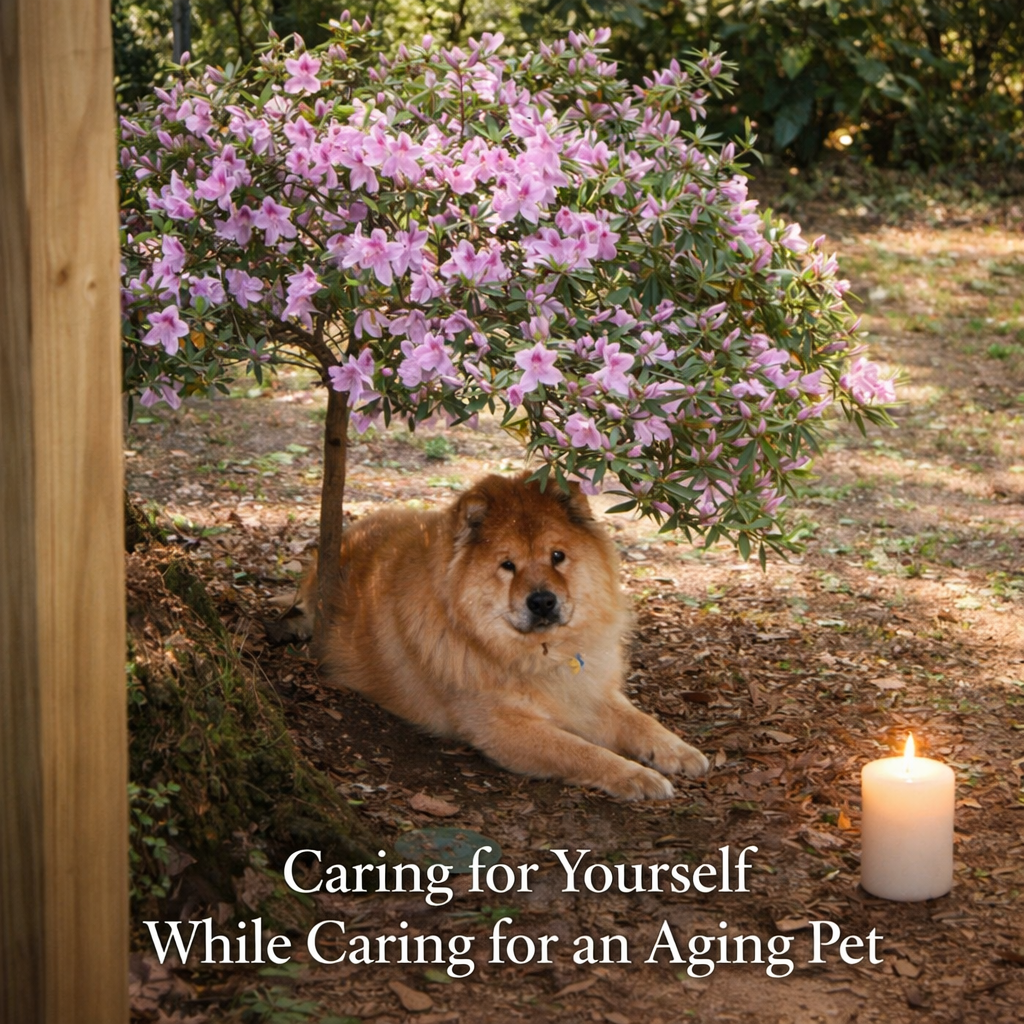
The image for this blog captures one of these moments for me… time spent quietly with Yoshi Bear as he reached the end of his journey.
🕯️ Walking This Path Together
Caring for an aging pet is one of the most tender seasons of the human-animal bond.
It asks a lot of you. But it also offers something profound: the opportunity to love with presence, patience, and intention.
At Life and Death Services, I companion people through these seasons, supporting both the practical and emotional aspects of caring for a beloved animal at the end of life.
You don’t have to do this perfectly.
And you don’t have to do it alone.